
Lentils (Lens culinaris)
OriginThe food for which Esau sold his birthright
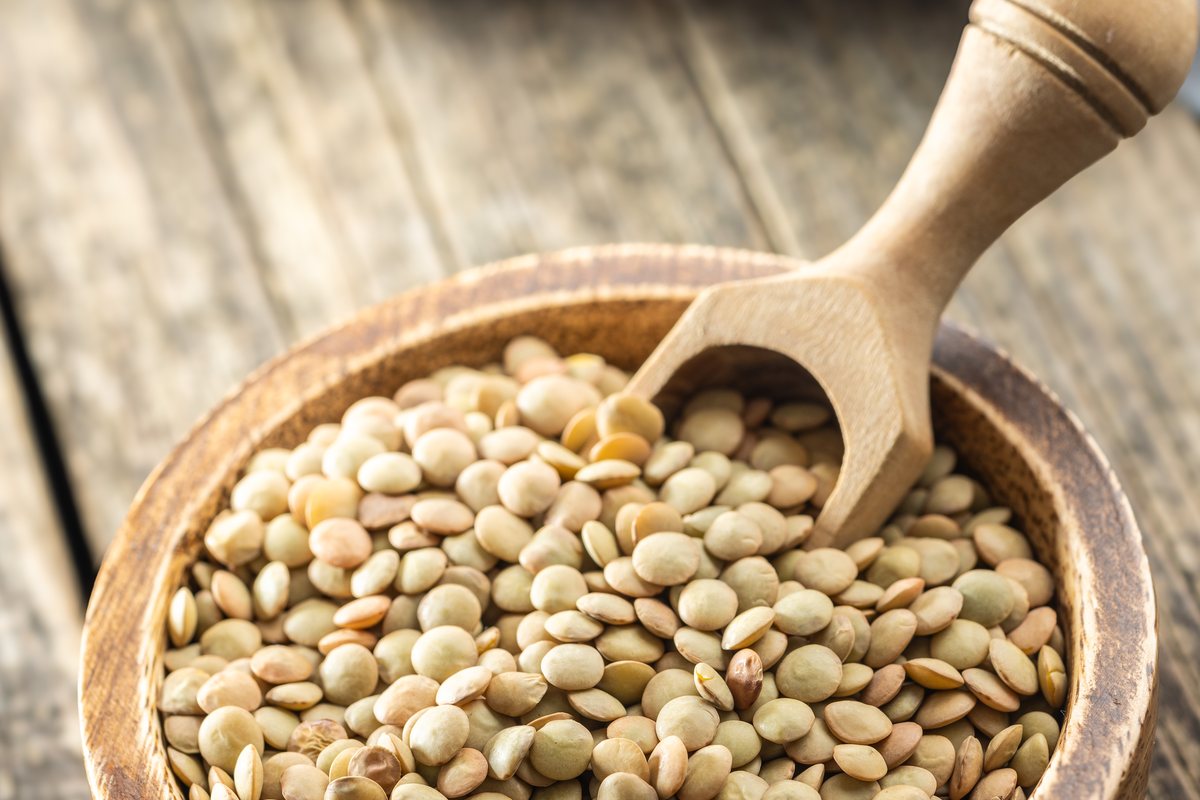
In the Bible, Esau sells his brother Jacob his birthright in exchange for a bowl of lentil stew - so ancient is their reputation as a filling meal.
Lentils are among the first cultivated plants of humankind. In the Fertile Crescent, the region between the Levant and Mesopotamia, they were domesticated around 9,000 years ago, along with wheat, barley, and peas. They spread to Europe via Egypt and Greece, and then to India via Persia, where they remain a staple food today as dal.
In Germany, lentils were long considered poor people's food, and the Swabian Alb lentil is once again being cultivated. Worldwide, Canada and India are the largest producers. The varieties differ considerably: red and yellow lentils are hulled and fall apart, flat lentils and green lentils remain firm to the bite, and Beluga and French Puy lentils retain their shape best.
To useWhat lentils can do for you
Lenses are a Protein and fiber packageDried lentils contain around 25 percent protein and about 11 percent fiber, as well as iron, zinc, magnesium, potassium, and plenty of folate. A serving of cooked lentils covers a large part of the daily folate requirement and provides as much protein as a small piece of meat.
Meta-analyses of controlled studies show that people who regularly eat legumes – about one serving a day – lower their LDL cholesterol by around 5 percent, slightly reduce their blood pressure, and tend to lose some weight because legumes are very satiating. Blood sugar rises more slowly after eating lentils than after eating bread or rice.
Her iron Plant-based iron is absorbed less efficiently than iron from meat – phytates from the lentils themselves inhibit absorption. Vitamin C from lemon, bell peppers, or tomatoes significantly improves absorption. For people who eat little or no meat, lentils are therefore one of the most important sources of iron.
IngredientsThis is what's in lenses
Lenses contain protein rich in lysine (which grains lack), complex carbohydrates and resistant starch, soluble and insoluble fiber, Folate, Iron, zinc, magnesium, potassium, B vitamins and polyphenols, especially in dark varieties.
Like all legumes, they contain Lectins and enzyme inhibitors that are destroyed during cooking – raw lentils should not be eaten. Phytic acid binds minerals; soaking, sprouting, and cooking reduce it. The oligosaccharides raffinose and stachyose are responsible for flatulence; red lentils contain less of these.
Enhanced combinationsWhat makes lenses stronger
Lentils need acid, spice and a grain partner - then they become a complete meal.
Grains provide the amino acids that lentils lack, and vice versa - dal with rice is a complete protein.
Vitamin C significantly increases iron absorption - lentil salad with lemon, lentils in tomato sauce.
It's no coincidence that Indian cuisine seasons dal this way – the spices are considered to be anti-flatulent.
Swabian lentils with a dash of vinegar: The acid enhances the earthy taste.
The soup vegetables round out the lentil stew.
A spoonful of oil or ghee at the end carries the spices and makes it filling.
What contradicts itselfIt's best to avoid these combinations.
Tannins reduce iron absorption - leave two hours between drinking tea and coffee.
For firm varieties, add salt only towards the end, otherwise the skin will remain hard.
Lectins are only destroyed by thorough cooking.
Lentils contain moderate amounts of purines - usually unproblematic for gout sufferers in normal quantities.
Those who rarely eat legumes should increase their intake slowly – the intestines will get used to it, and the bloating will subside.
Old lentils do not soften even after hours - use within one year.
In the kitchenWhere they belong
- DalRed lentils with turmeric, cumin, ginger, and tomato.
- Lentils with SpätzleSwabian cuisine with sausages and vinegar.
- Lentil soupWith carrot, celery, potato and marjoram.
- Lentil saladBeluga lentils with lemon, herbs and feta.
- Mercimek ÇorbasıTurkish red lentil soup with lemon and mint.
- MujaddaraLentils with rice and caramelized onions.
- Lentil BologneseRed lentils instead of minced meat.
- KhichdiLentils and rice cooked together - the Ayurvedic gentle diet.
- Lentil pattiesWith rolled oats and spices.
- Lentil curryWith coconut milk and spinach.
As a home remedyKhichdi - the Ayurvedic light diet
Khichdi made from lentils and rice
- Wash 100g each of yellow or red lentils and basmati rice thoroughly.
- Briefly roast one teaspoon each of cumin and grated ginger and a pinch of turmeric in a tablespoon of ghee.
- Add lentils and rice, pour in one liter of water and cook for 25 to 30 minutes until soft and porridge-like.
- Season with salt and a little lemon, eat warm.
As a light, nourishing meal after gastrointestinal infections, for sensitive digestion, or for a few easy days. In Ayurveda, Khichdi is the classic bland diet; lentils and rice together provide complete protein, and the spices make it easily digestible.
Two to three meals a day for a few days. Not a substitute for medical treatment if symptoms persist.
Ayurveda & TCMWhat the old systems say
Ayurveda
The lens (MasuraIn Ayurveda, mung bean dal is considered sweet, astringent, cooling, and light. It calms Pitta and Kapha and can increase Vata—therefore, it is prepared with ghee, cumin, ginger, and asafoetida. Yellow mung bean dal is considered even lighter.
Traditional Chinese Medicine
In traditional Chinese medicine (TCM), lentils play a negligible role. Modern classifications describe them as sweet and neutral, strengthening the spleen and stomach, and eliminating dampness – similar to other legumes.
Warning noticesWhen you should be careful
Please note
- Raw: Never eat raw or undercooked.
- Flatulence: Increase slowly, cook well, season with cumin or caraway.
- Gout: moderate purine content - use with caution during an acute flare-up.
- Iron deficiency: Lenses can help, but they do not replace treatment for a proven deficiency.
- Kidneys: Potassium-rich – discuss amounts with your doctor if you have kidney failure.
This page provides information and does not replace medical advice. If symptoms persist, please consult a doctor.
Related to the topicRead on and cook along!
Shop links lead to our product pages; it is indicated there if a partner is involved.
SourcesWhat is this based on?
- Ha V et al. Effect of dietary pulse intake on established therapeutic lipid targets for cardiovascular risk reduction: a systematic review and meta-analysis of randomized controlled trials. CMAJ 2014; 186(8): E252–E262.
- Jayalath VH et al. Effect of dietary pulses on blood pressure: a systematic review and meta-analysis of controlled feeding trials. American Journal of Hypertension 2014; 27(1): 56–64.
- Kim SJ et al. Effects of dietary pulse consumption on body weight: a systematic review and meta-analysis of randomized controlled trials. American Journal of Clinical Nutrition 2016; 103(5): 1213–1223.
- German Nutrition Society: Eating and drinking well - the DGE recommendations, 2024.
- USDA FoodData Central: Lentils, raw.


