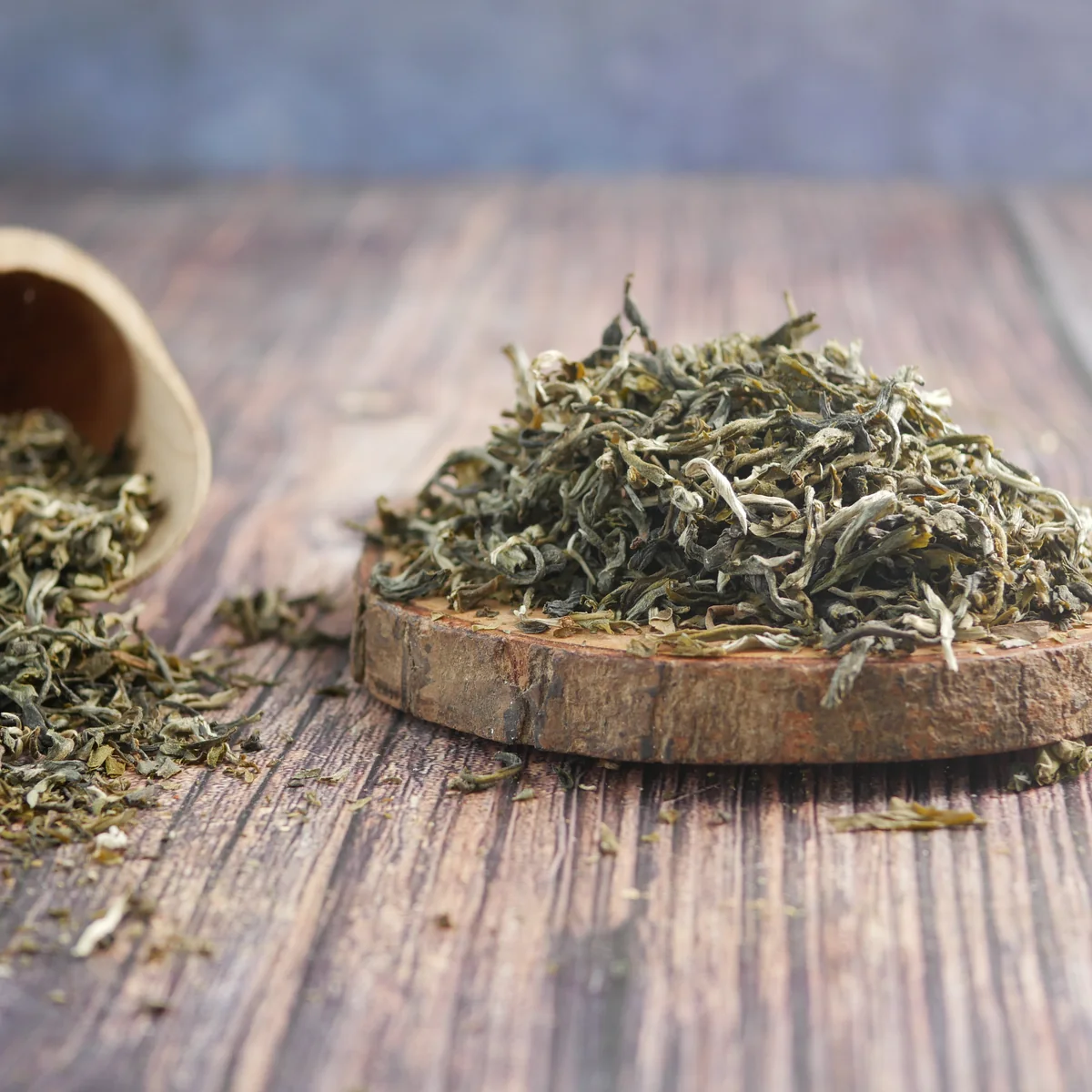
Japanese Sencha, spring harvest.
Loose green tea (Sencha)
Available at teetopfTea tradefrom Limbach-Oberfrohna in Saxony
Buy directlywith the partner, without detours
Independentno pharmaceutical company
What tradition tells us about green tea
Emperor Shennong
According to legend, tea leaves fell into the boiling water of the Chinese Emperor Shennong. A tea culture in China is documented as existing for over two thousand years.
Lü Cha
In Chinese medicine, green tea is considered bitter, sweet, and cooling. In Japan, its preparation, including the tea ceremony, has become an art form in its own right.
The ritual
In Morocco, gunpowder is brewed with fresh mint as a sign of hospitality. In summer, it tastes particularly mild when cold-brewed overnight.
The profile in the Botanical Archive: benefits, ingredients, home remedies, Ayurveda & TCM and all sources.
What folk medicine used green tea for: in the Botanical Archive →Japanese Sencha, whole leaf, mild and grassy in taste.
At a glance
- Plant: Camellia sinensis (tea shrub), variety for green tea, unfermented
- Part used: the young leaves and leaf buds
- Origin: In Japan, Sencha is the classic Japanese green tea variety.
- Quality feature: A rich green color and whole, unbroken leaves indicate gentle processing.
- Tradition: Known in Japan since the 8th century, Sencha itself is a more recent processing method from the 17th/18th century.
Traditional: In Japan, Sencha is the everyday tea, served at any time of day; mild, grassy, and with a gentle caffeine content. You control the amount of caffeine in your cup by adjusting the water temperature, the amount of tea, and the steeping time.
Folk medicine, tradition, research
What green tea has been more than just a beverage in Japan and China for centuries, what EGCG and L-theanine can do, and what studies show.
What's inside
Caffeine, traditionally also called "theine" in green tea, is chemically identical to the caffeine from coffee, along with catechins or polyphenols such as EGCG and small amounts of L-theanine.
How it is prepared
Pour 1 teaspoon of the leaves per cup with water that is approximately 70 to 80 °C (not boiling, as boiling makes Sencha bitter) and let it steep for 1 to 2 minutes. The leaves usually yield one or two more infusions.
Good to know
- Contains caffeine: If you are sensitive to caffeine, pregnant or breastfeeding, or if you are a child, keep an eye on the amount.
- Tannins can inhibit iron absorption from plant-based foods; ideally, avoid drinking them directly with iron-rich meals.
- Not for pets: see our pet health section
As always, herbal tea is a beverage to be enjoyed, not a substitute for good food or medical advice. If you are pregnant or breastfeeding, have children, pre-existing medical conditions, or are taking regular medication, it's advisable to consult your doctor.
Available from our partner teetopf
Advertisement · Affiliate link: If you purchase through this link at teetopf.de, we may receive a commission from the provider. This does not change the price for you.
Why this partner
teapot from Saxony
We only recommend manufacturers and distributors that we have reviewed and that do not belong to any pharmaceutical company.
- Tea tradefrom Limbach-Oberfrohna in Saxony
- Owner-managedno corporate structure
- Loose teaslarge selection of herbs and teas
- Buy directlyShipping and invoice from the retailer
Questions
Frequently Asked Questions
Where do I buy Loose green tea (Sencha) ?
Directly from teetopf. The button above will take you to the partner's product page; shipping and invoicing will be handled by them. The price remains the same for you.
What was green tea used for in the past?
We explain this in detail in the Botanical Archive: what folk medicine used green tea for, what research says about it today, and with all the sources. View portrait →
How do you choose your partners?
We check ownership, origin, organic certification, and, where available, laboratory analyses. We do not accept partners belonging to a pharmaceutical company.