
Aronia (Aronia melanocarpa)
OriginAn Indian berry about Russia
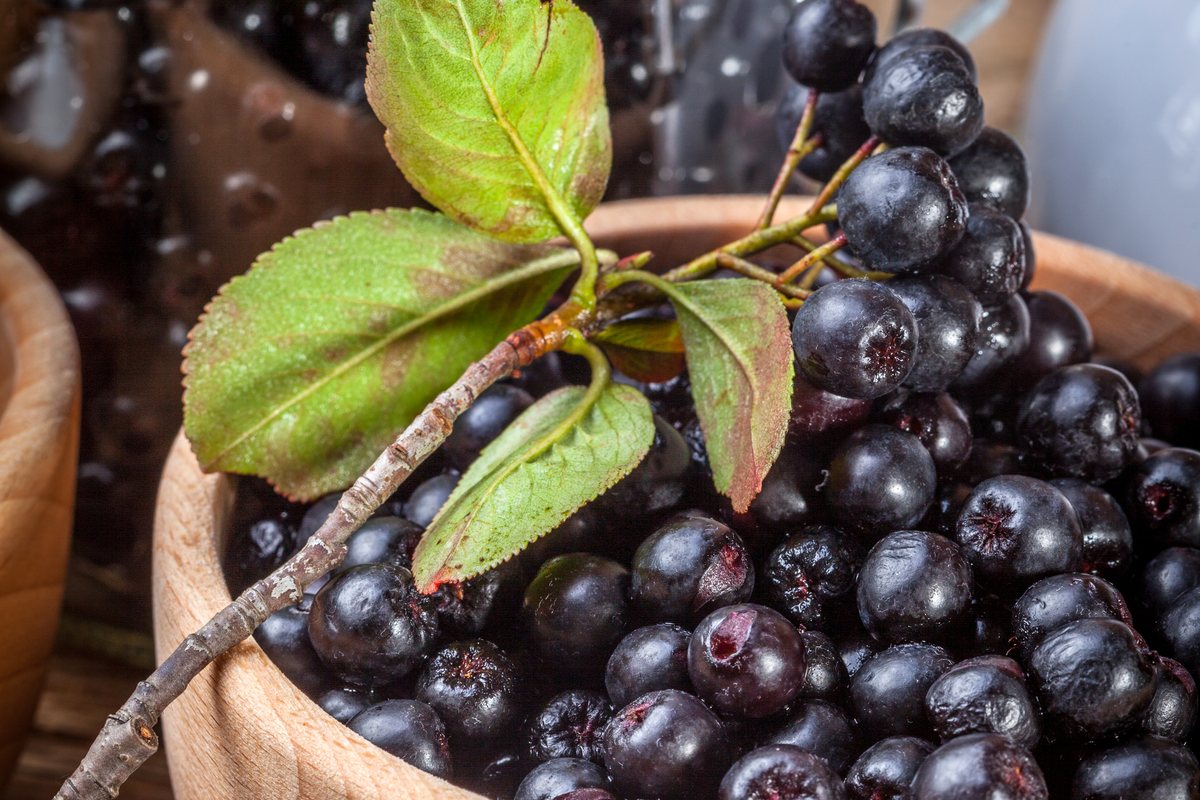
The Russian breeder Ivan Michurin brought the Aronia from America at the beginning of the 20th century - as a hardy fruit plant for Siberia.
The aronia berry originates from the swamps and forests of eastern North America, where indigenous peoples dried the berries and processed them into pemmican, a durable mixture of dried meat, fat, and berries. In Europe, it remained for a long time an ornamental shrub with red autumn foliage. It was only the plant breeder Ivan Michurin who recognized its value as a fruit: it is extremely frost-hardy and reliably bears fruit.
Originating in the Soviet Union, it spread to the countries of the Eastern Bloc; in East Germany, it was cultivated on a large scale in Schirgiswalde, Saxony, starting in 1976, also for its use as food coloring. Almost forgotten after German reunification, it has experienced a renaissance since the 2010s as a local "superfood." The shrub is undemanding, thrives in any garden, and provides excellent shelter for birds.
To useWhat the aronia berry does for you
The aronia has one of the highest polyphenol levels Berries contain all types of fruit – especially anthocyanins and procyanidins, as well as chlorogenic acid. In laboratory tests on antioxidant capacity, they surpass blueberries and elderberries. This alone doesn't reveal much about their effects on the body, but it does make them one of the best-researched native berries.
In controlled studies in humans, aronia juice or extract lowered blood pressure by a few mmHg in slightly elevated individuals and slightly improved blood lipid levels and inflammatory markers. The studies are mostly small and short, and not all found an effect.
To be honest: Aronia is an excellent berry for a polyphenol-rich diet and a local alternative to expensive exotic fruits. It is not a substitute for blood pressure treatment. Those who enjoy it can drink a small glass of juice a day or eat a handful of dried berries.
IngredientsThis is what's in the aronia berry
The blackish-purple color comes from Anthocyanins, especially cyanidin glycosides. These cause the bitter, furry taste. Procyanidins (Tanners) that react with the proteins in saliva. Also present are chlorogenic acid, quercetin, vitamin C, vitamin K, folate, dietary fiber, and sorbitol.
Like all pome fruits, the small seeds contain amygdalin, from which hydrocyanic acid can be produced. The German Federal Institute for Risk Assessment sees no risk from consuming typical quantities of raw berries; the amount is further reduced when heated or when juiced. Aronia berries also contain oxalate.
Enhanced combinationsWhat makes the aronia stronger
Aronia berries need partners to balance their bitterness: sweetness, fat, or acidity.
Aronia apple juice or jam: The apple brings sweetness and pectin, the aronia color and depth.
When dried, it is less furry - a handful in muesli or porridge.
The milk protein binds some of the tannins, making the taste rounder.
Frost or a few days in the freezer make the berries milder and sweeter.
Dark berry juices blended - local polyphenol mix.
Like cranberries as a tart and fruity side dish.
What contradicts itselfIt's best to avoid these combinations.
Raw, she puckers her mouth - a handful in a fruit salad, not a bowlful.
Aronia juice is very tart and acidic - mix with water or apple juice, 50 to 100 ml is sufficient.
Aronia contains oxalate - use in moderation if you are prone to kidney stones.
Tannins inhibit the absorption of plant-based iron - drink between meals if you have an iron deficiency.
The effect is small, but can add up - watch out for dizziness if you have low blood pressure.
As with all pome fruits: do not grind the kernels specifically and consume them in concentrated form.
In the kitchenWhere she belongs
- Aronia apple jamHalf aronia, half apple, with gelling sugar.
- Aronia juice spritzerA splash of juice in mineral water.
- Porridge with aroniaCook dried berries with cinnamon.
- Aronia smoothieWith banana and yogurt - the banana takes away the bitterness.
- Aronia chutneyServe with onions, vinegar and spices, and game and cheese.
- Aronia muffinsDried or fresh berries in the dough.
- Red cabbage with aroniaA handful of berries instead of cranberries.
- Aronia syrupWith lemon and sugar for lemonade.
- Trail mixDried aronia berries with nuts and seeds.
- Aronia quarkAronia powder or puree in quark with honey.
As a home remedyAronia juice as a daily portion
Aronia juice made from fresh berries
- Wash 1 kg of fresh or thawed aronia berries and crush them lightly.
- Bring 200 ml of water to a boil and simmer gently for 10 minutes.
- Strain through a cloth, mix with apple juice to taste.
- Pour hot into clean bottles; store in the refrigerator once opened.
As a daily dose of polyphenols for people who want to increase their diet with more berries. Studies have shown that this type of juice has a slight effect on blood pressure and blood lipids.
50 to 100 ml per day, diluted. Not a substitute for medically prescribed blood pressure medication. Do not drink with meals if you have an iron deficiency.
Ayurveda & TCMWhat the old systems say
Ayurveda
Aronia is not a plant used in Ayurvedic tradition. Based on its taste – strongly astringent, slightly sweet and sour – it would be classified today as reducing Pitta and Kapha, but increasing Vata; therefore, it is best enjoyed with something sweet and warming.
Traditional Chinese Medicine
Aronia berries are not mentioned in Traditional Chinese Medicine (TCM). Modern TCM practitioners often associate dark, tart berries with the liver and kidney meridians and describe them as blood-nourishing and strengthening – this is a transposition, not a tradition.
Warning noticesWhen you should be careful
Please note
- Iron uptake: Tannins inhibit the absorption of iron from plants.
- Oxalate: Use moderately if you have kidney stones.
- Blood pressure: Be aware of dizziness if you have low blood pressure or are taking blood pressure-lowering medication.
- Stomach: Harsh tannins can irritate a sensitive stomach.
- Cores: Do not grind specifically and consume in concentrated form (amygdalin).
This page provides information and does not replace medical advice. If symptoms persist, please consult a doctor.
Related to the topicRead on and cook along!
Shop links lead to our product pages; it is indicated there if a partner is involved.
SourcesWhat is this based on?
- Kokotkiewicz A, Jaremicz Z, Luczkiewicz M. Aronia plants: a review of traditional use, biological activities, and perspectives for modern medicine. Journal of Medicinal Food 2010; 13(2): 255–269.
- Jurikova T et al. Fruits of black chokeberry Aronia melanocarpa in the prevention of chronic diseases. Molecules 2017; 22(6): 944.
- Loo BM et al. Consumption of chokeberry (Aronia mitschurinii) products modestly lowered blood pressure and reduced low-grade inflammation in patients with mildly elevated blood pressure. Nutrition Research 2016; 36(11): 1222–1230.
- Wu X et al. Lipophilic and hydrophilic antioxidant capacities of common foods in the United States. Journal of Agricultural and Food Chemistry 2004; 52(12): 4026–4037.
- Federal Institute for Risk Assessment: Hydrocyanic acid in aronia berries - questions and answers.


