
Strawberry (Fragaria × ananassa)
OriginA child of two American women
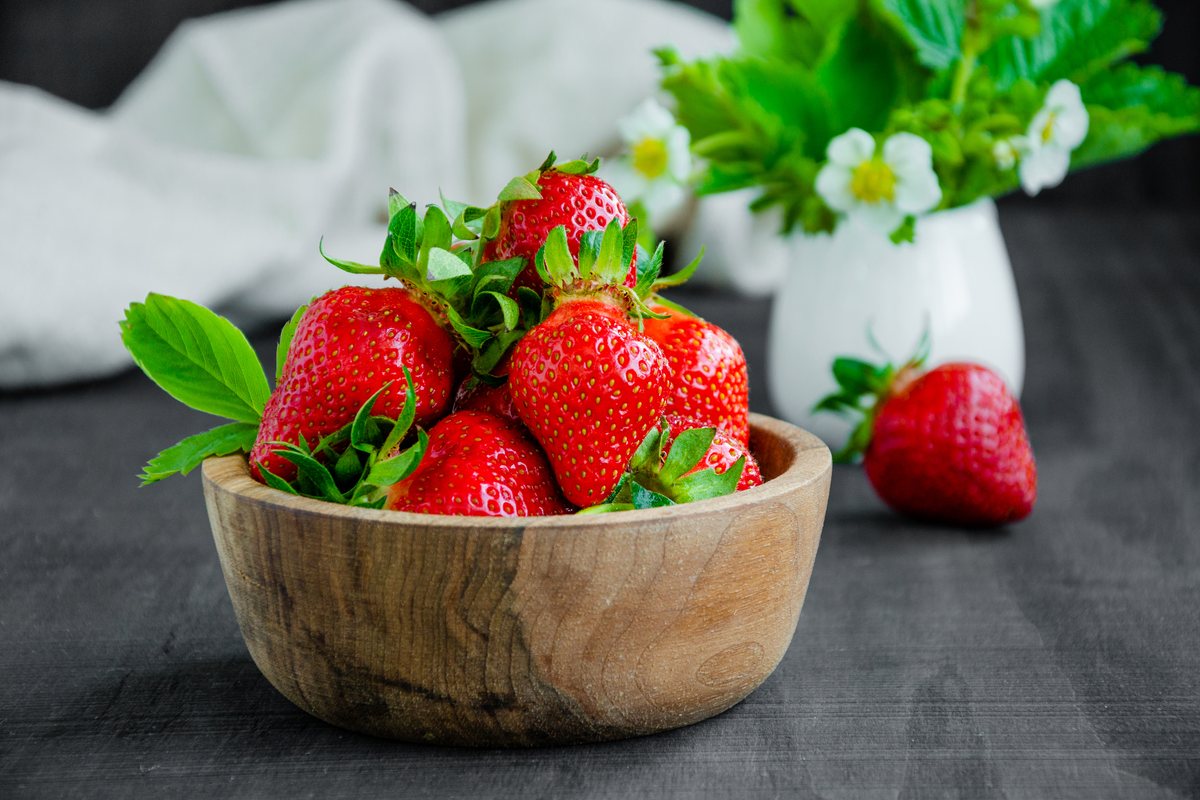
The garden strawberry originated by chance in French gardens - from a strawberry from Chile and one from Virginia.
For centuries, people in Europe gathered the small, fragrant wild strawberry. Fragaria vesca. In the 17th century, the scarlet strawberry arrived in Europe from Virginia. In 1714, the French officer Amédée-François Frézier brought large-fruited strawberry plants from Chile. Around 1750, the two varieties cross-pollinated accidentally in the gardens of Brittany and Versailles – the result was large, aromatic, and smelled slightly of pineapple, hence the name. ananassa.
Today there are hundreds of varieties. In Germany, the outdoor strawberry season begins in May and ends in July, depending on the region; in winter, strawberries come from Spain, Morocco, or Egypt, often from water-intensive cultivation in dry regions. Botanically, the strawberry is not a berry: the red flesh is the thickened receptacle, the actual fruits are the small yellow achenes on the surface.
To useWhat the strawberry does for you
Strawberries are a light and nutrient-rich fruitWith approximately 32 kcal per 100 g, they provide about 60 mg of vitamin C – a 200 g bowl covers the daily requirement. They also contain folate, manganese, potassium, fiber, and plenty of polyphenols: anthocyanins (the red color), ellagitannins, and flavonoids.
Small controlled studies found that freeze-dried strawberries lowered LDL cholesterol and inflammatory markers and dampened the post-meal rise in blood sugar in people with metabolic syndrome. Large observational studies link high berry consumption with fewer heart attacks, especially in women.
Honestly, these are mostly small studies and correlations, not proof of a healing effect. But as a fruit that tastes sweet, has hardly any calories, and is rich in vitamin C and polyphenols, the strawberry is hard to beat.
IngredientsThis is what's inside a strawberry
Strawberries consist of approximately 90 percent water. They contain Vitamin C, Folate, manganese, potassium, fiber, and low sugar. The color comes from Anthocyanins, especially pelargonidin-3-glucoside. Also present are ellagitannins and ellagic acid, flavonols such as quercetin and kaempferol, and fisetin.
The aroma comes from several hundred volatile compounds, including furaneol, which smells like caramel. Strawberries do not ripen further after harvesting—they become softer, but not sweeter. That's why fully ripe, field-grown strawberries taste so much better than imported ones picked early.
Enhanced combinationsWhat makes the strawberry stronger
Strawberries like acidity, cream and pepper - and they do not tolerate long storage.
A few drops of aged balsamic vinegar and black pepper bring out more aroma than sugar.
Strawberry salad with mint or basil - fresh and unusual.
Strawberries in muesli, along with fiber and protein, help to slow down blood sugar levels.
Strawberries, baby spinach, goat cheese, walnuts - sweet, sour, salty.
Vitamin C improves the absorption of iron from plants.
Rhubarb and strawberry compote: acid meets sweetness.
What contradicts itselfIt's best to avoid these combinations.
Wash only shortly before eating, then remove the stem - otherwise they will absorb water and lose flavor.
Strawberries release histamine in the body - itching and hives are often a pseudo-allergy.
Strawberries are regularly among the fruits most heavily contaminated with pesticide residues - wash thoroughly or buy organic.
Vitamin C and color suffer - briefly cook strawberry jam or use gelling sugar 3:1.
Little flavor, long transport routes, often high water consumption - frozen strawberries are the better choice in winter.
Children with atopic dermatitis are more likely to react to strawberries - introduce them carefully.
In the kitchenWhere she belongs
- Strawberries with quarkThe summer classic - stir quark with a little milk until smooth.
- Strawberry cakeShortcrust pastry or sponge cake, vanilla cream, fresh strawberries.
- Strawberry and spinach saladWith goat cheese, walnuts and balsamic vinegar.
- Strawberry-rhubarb compoteBriefly cooked, with vanilla.
- Strawberry jamCook briefly to preserve color and aroma.
- Strawberries with balsamic vinegarHalve the potatoes, add balsamic vinegar and pepper, and let marinate for one hour.
- SmoothieWith banana and oat milk.
- Strawberry tiramisuWith mascarpone and ladyfingers.
- Strawberry punchWith white wine or alcohol-free with mint.
- Strawberry sorbetPuree, add a little sugar and lemon, then freeze.
As a home remedyStrawberry leaf tea
Strawberry leaf tea
- Collect young leaves from unsprayed strawberry plants or wild strawberries.
- Allow to dry completely in a shady, airy place.
- Pour 250 ml of hot water over two teaspoons of crushed leaves.
- Let it steep for 10 minutes, then strain.
Traditionally used as a mild herbal tea for mild diarrhea – the tannins have a slightly astringent effect. It is also an ingredient in breakfast and everyday teas due to its mild flavor. Its effectiveness has not been scientifically proven.
Two to three cups a day. Use only completely dried leaves. Avoid if you have a known strawberry allergy. Consult a doctor if diarrhea persists.
Ayurveda & TCMWhat the old systems say
Ayurveda
The garden strawberry is not mentioned in the classical texts. Modern Ayurvedic practitioners describe it as sweet and sour and slightly warming: good for Vata, in moderation for Kapha, and should be used with caution in cases of excess Pitta and skin irritations.
Traditional Chinese Medicine
In Traditional Chinese Medicine (TCM), the strawberry is considered (Cao MeiIt is described as sweet-sour and cooling. It is said to moisten the lungs, produce body fluids, and strengthen the stomach – in cases of dry cough, thirst, and hoarseness.
Warning noticesWhen you should be careful
Please note
- Pseudoallergy: Itching, hives or skin redness after eating strawberries are common and usually caused by histamine release.
- True allergy: Rarely, then usually with cross-reaction to birch or other rose family plants.
- Residues: Wash thoroughly or buy organic.
- Oxalate: Strawberries contain moderate amounts of oxalate – but not in large quantities for people with kidney stones.
- Children: Introduce carefully in cases of atopic dermatitis.
This page provides information and does not replace medical advice. If symptoms persist, please consult a doctor.
Related to the topicRead on and cook along!
Shop links lead to our product pages; it is indicated there if a partner is involved.
SourcesWhat is this based on?
- Giampieri F et al. The strawberry: composition, nutritional quality, and impact on human health. Nutrition 2012; 28(1): 9–19.
- Basu A et al. Strawberries decrease atherosclerotic markers in subjects with metabolic syndrome. Nutrition Research 2010; 30(7): 462–469.
- Cassidy A et al. High anthocyanin intake is associated with a reduced risk of myocardial infarction in young and middle-aged women. Circulation 2013; 127(2): 188–196.
- Darrow GM. The Strawberry: History, Breeding and Physiology. New York 1966.
- USDA FoodData Central: Strawberries, raw.


