
OriginThe tree that survived the dinosaurs
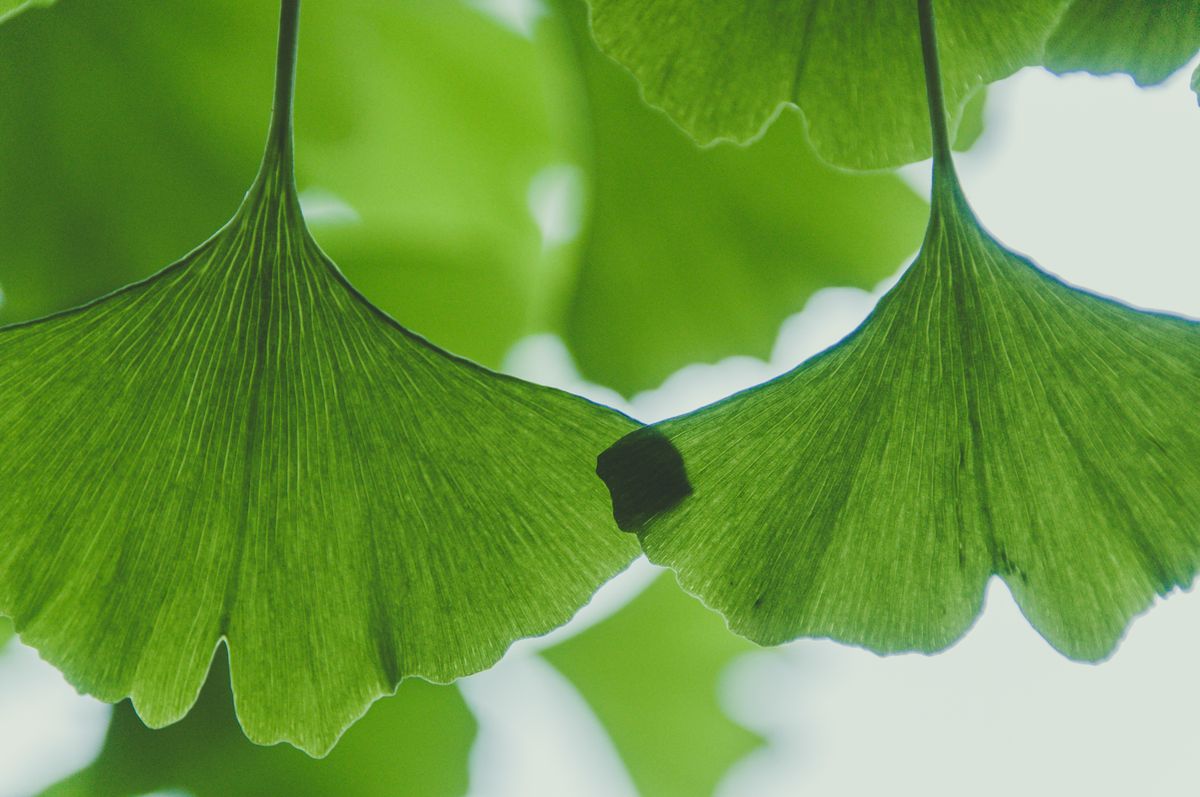
Ginkgo trees were already growing 200 million years ago, when dinosaurs still roamed the forests - and six trees in Hiroshima survived the atomic bomb in 1945 and are still sprouting today.
The ginkgo is a living fossil in the truest sense of the word: it is the only surviving species of an entire plant order that was widespread throughout the world during the Mesozoic Era. Fossilized ginkgo leaves from the Jurassic period are almost indistinguishable from those of today. Botanically, it is neither a deciduous nor a coniferous tree, but stands alone between the two groups – its fan-shaped, bilobed leaves (hence...) bilobaThey have a forked, branched network of veins, unlike any other plant.
In the wild, it had almost disappeared; cultivation preserved it. Chinese and Japanese temple gardens planted it for centuries, and from there it came to Europe in the 18th century. Goethe dedicated a poem to it in 1815, which made it popular in Germany. Today, it stands in cities worldwide because it is exceptionally robust: it tolerates exhaust fumes, road salt, drought, and soil compaction better than almost any other tree—and is immune to virtually all native pests.
The most famous chapter of its story takes place in Hiroshima. Several ginkgo trees stood only one to two kilometers from the hypocenter of the atomic bomb explosion. They were defoliated and charred—and sprouted again the following spring. Some of them are still alive today and are known as hibakujumoku, Surviving trees were marked. For the Japanese, the ginkgo has since become a symbol of resilience; medically, this has no significance, but it explains part of its appeal.
To useWhat the ginkgo does for you - detailed explanation
Ginkgo is among the best-researched herbal medicines, and precisely for this reason, the results must be considered separately. The European Medicines Agency lists certain standardized dry extracts made from ginkgo leaves in the highest category - well-established use - to symptomatic treatment of mild cognitive impairment in older people and to Improvement in pain-free walking distance For arterial circulatory disorders of the legs. Additionally, it has a traditional use for dizziness and tinnitus.
The word is crucial. Treatment - unlike prevention. Two very large, well-conducted studies have investigated whether ginkgo can prevent the onset of dementia in healthy older people: the American GEM study with over 3,000 participants and the French GuidAge study with almost 3,000. Both found no difference to placebo. Ginkgo is therefore not a means of preventing dementia, and anyone who takes it for that reason is spending their money on a hope that has been tested and not confirmed.
In already existing The situation is different, albeit modest, for mild to moderate dementia: Meta-analyses of a high-dose standard extract—usually 240 milligrams daily—find small but statistically significant improvements in cognitive tests and in managing daily life, especially when behavioral symptoms such as restlessness are present. The effects are small, not all studies yield the same results, and some of the research originates from the manufacturers' network. But it is a real, proven application.
And one more practical point that is often overlooked: Ginkgo leaf tea is not an alternative. The leaf naturally contains Ginkgolic acids, These substances are highly allergenic and chemically related to the irritants of poison ivy. In pharmaceutical manufacturing, they are reduced to below 5 ppm – this does not happen with self-picked leaves. Furthermore, the active ingredients are barely present in relevant quantities in the infusion. Ginkgo is a plant for which only the commercially available preparation makes sense.
IngredientsThat's what's in the leaf
Two groups of substances are responsible for the effect, and together they form the extract. Flavone glycosides Quercetin, kaempferol, and isorhamnetin derivatives, standardized to approximately 24 percent in the extract, have an antioxidant effect and stabilize blood vessel walls. Terpene lactones The ginkgolides A, B, C, and bilobalide, adjusted to approximately 6 percent, are the truly unique component: Ginkgolide B blocks platelet-activating factor PAF, a messenger substance involved in blood clotting and inflammation. This explains both the blood flow-enhancing effect and the bleeding risk.
The Ginkgolic acids These are the problematic part. They belong to the same chemical family as the urushiols of poison ivy and are strong contact allergens. In pharmaceutical manufacturing, they are reduced to below 5 ppm through special extraction steps – this is one of the reasons why the production of a ginkgo extract is complex and why the studies have always been conducted using a specific manufacturing process.
A separate chapter is the... seeds. The female trees bear fleshy seed pods that, when rotting, emit a strong butyric acid odor – which is why almost exclusively male trees are planted in cities. The kernel inside, the ginkgo nut, is a delicacy in East Asia and is eaten roasted. However, in larger quantities it is poisonousIt contains ginkgotoxine, an antagonist of vitamin B6 that can trigger seizures. Poisonings have been documented in Japan, primarily in children. A few nuts are harmless, but a whole bowlful is not.
Enhanced combinationsWhat matters in the ginkgo
With this plant, it's not the combination that matters, but the shape - and a very specific safety question.
Only the finished product corresponds to what was tested - tea and self-picked leaves do not.
This is the amount to which the positive studies in mild dementia refer.
As with all extracts of this type, the effect builds up slowly.
Memory problems have many causes – thyroid issues, vitamin B12 deficiency, depression, medications. These should be checked first.
For circulatory disorders of the legs, structured walking training is the most effective measure; ginkgo is also used.
The underlying cause of circulatory disorders is the risk factors, not the plant.
What contradicts itselfIt's best to avoid these combinations.
The allergenic ginkgolic acids are still present there, and the dosage is unpredictable.
Two large studies have examined this and found no effect.
Ginkgolide B inhibits platelet aggregation - the risk of bleeding may increase.
Stop taking it at least one week beforehand and inform the surgeon.
There are reports of a lowering of the seizure threshold - consult a doctor about this.
Ginkgotoxin is a vitamin B6 antagonist and can trigger seizures.
ApplicationHow it is used
- Standardized dry extract240 mg daily - the form and dose to which the studies refer.
- In cases of mild dementiaSymptomatic and accompanying treatment, after medical clarification of the cause.
- In claudicationTo improve pain-free walking distance, in conjunction with gait training.
- For dizziness and tinnitusListed as a traditional use - the evidence here is significantly weaker.
- Eight weeks of patienceIt is impossible to assess beforehand whether the preparation will be effective.
- No loose leaf teaSelf-picked leaves contain allergenic ginkgolic acids - do not use.
- Ginkgo nutsRoasted as a delicacy in East Asia - only a few pieces, as they are poisonous in large quantities.
- City treeExtremely robust against exhaust fumes, salt and drought - therefore planted everywhere.
- Male treesPreferred in cities because the female ovules have a strong odor.
- Discontinue before surgeryAt least one week in advance, due to the risk of bleeding.
As a home remedyWhat really matters for the mind
The measures with the best data
- Movement: At least 150 minutes of moderate endurance exercise per week – brisk walking is sufficient. This is the single best-documented measure for maintaining cognitive function in old age.
- Hearing and seeing: Untreated hearing loss is considered one of the biggest modifiable risk factors for dementia. Get a hearing test, use hearing aids, and have your glasses adjusted.
- Blood pressure, blood sugar, sleep: Well-controlled blood pressure in middle age, treated diabetes, and sufficient sleep protect the blood vessels in the brain just as much as those in the heart.
- Contact and suggestions: Regular social interaction and mentally stimulating activities are consistently associated with better cognitive performance in observational studies. Ginkgo can complement these activities, but it cannot replace either.
For anyone wanting to improve their memory. We're deliberately not including a tea recipe here, because there isn't one for this plant that we could endorse – and because the honest answer to the question "what helps the brain" isn't found in a cup of tea. The measures listed here have far better supporting evidence than any herbal remedy, and they cost nothing.
Continuously, not as a short course. If you also want to take ginkgo, then only as a standardized preparation from the pharmacy, in a sufficient dose and for at least eight weeks – and not without medical consultation if you actually have memory problems. Newly occurring confusion, sudden word-finding difficulties, one-sided weakness, or visual disturbances are an emergency and not a reason for taking a medication.
Ayurveda & TCMWhat the old systems say
Ayurveda
The ginkgo tree is not used in Ayurveda – it is an East Asian tree. The Ayurvedic plant with a comparable role is... Brahmi (Bacopa monnieri), which is considered a Medhya Rasayana, a remedy for strengthening mind and memory, and for which there are also modern studies showing only small effects. Two cultures, two plants, the same question – and in both cases, modest results.
Traditional Chinese Medicine
In the Chinese Materia Medica, it is not the leaf, but the seeds the classic drug: Bai Guo, Sweet, bitter, astringent, and neutral in taste, it is associated with the lung and kidney meridians and used for chesty coughs, asthma, and frequent urination. It is explicitly considered mildly toxic and is used in limited quantities and always cooked. The leaf application, as we know it, is a 20th-century European development.
Warning noticesWhen you should be careful
Please note
- Only finished product: Self-picked leaves and ginkgo tea contain allergenic ginkgolic acids and cannot be dosed.
- Bleeding risk: Ginkgolide B inhibits platelets - consult a doctor if you are taking Marcumar, ASA and other anticoagulants.
- Before operations: Stop at least one week beforehand and inform the surgeon.
- No prevention: Two large studies (GEM, GuidAge) found no benefit for dementia prevention in healthy individuals.
- Epilepsy: There are reports of a lowering of the seizure threshold - check beforehand if you have a seizure disorder.
- Ginkgo nuts: In larger quantities it is toxic - ginkgotoxin acts as a vitamin B6 antagonist and can trigger cramps.
This page provides information and does not replace medical advice. If symptoms persist, please consult a doctor.
Related to the topicRead on and cook along!
Shop links lead to our product pages; it is indicated there if a partner is involved.
SourcesWhat is this based on?
- EMA/HMPC: European Union herbal monograph on Ginkgo biloba L., folium - well-established use for standardized dry extracts.
- DeKosky ST et al. Ginkgo biloba for prevention of dementia: a randomized controlled trial (GEM Study). JAMA 2008; 300(19): 2253–2262.
- Vellas B et al. Long-term use of standardized Ginkgo biloba extract for the prevention of Alzheimer's disease (GuidAge): a randomized placebo-controlled trial. Lancet Neurology 2012; 11(10): 851–859.
- Tan MS et al. Efficacy and adverse effects of Ginkgo biloba for cognitive impairment and dementia: a systematic review and meta-analysis. Journal of Alzheimer's Disease 2015; 43(2): 589–603.
- Livingston G et al. Dementia prevention, intervention, and care: Lancet Commission report. Lancet - on modifiable risk factors.


