OriginThe hooded Andean flower
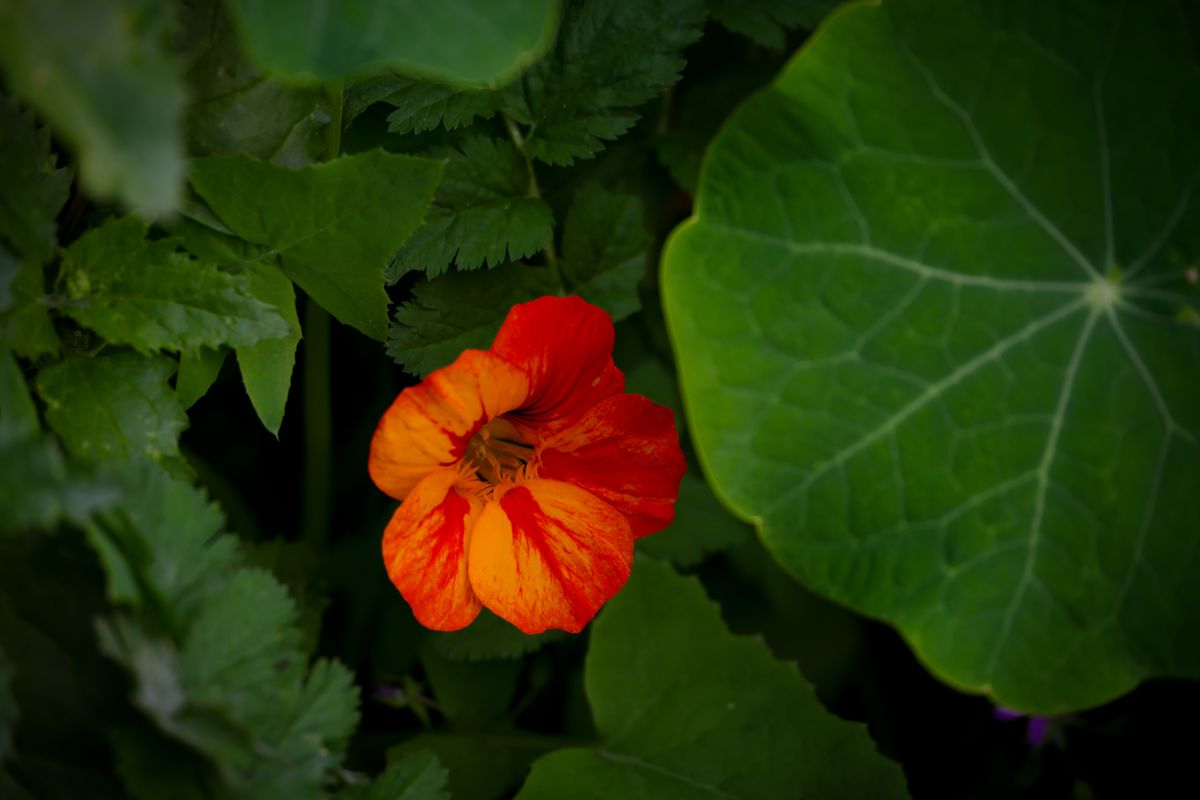
The name comes from the spur of the flower, which looks like the hood of a monk's robe - botanically it is called Tropaeolum, after the Tropaion, the ancient victory monument, because the leaf and flower are reminiscent of a shield and helmet.
The garden nasturtium originates from the Andes Mountains, in the region of present-day Peru and Bolivia, where it was used as a vegetable and medicinal plant. It arrived in Europe with Spanish ships in the 16th century and spread rapidly in gardens during the 17th century – initially as an ornamental plant, due to its bright orange-red flowers and unusual round, shield-shaped leaves. Its edible and medicinal uses only became known later.
Botanically, it's a surprise: despite its name, it is not related to watercress And it's not related to the cruciferous vegetables in the strict sense either – it forms its own family, the Tropaeolaceae, with its relatives. What it shares with cress, mustard, and horseradish is its chemical composition: it produces glucosinolates, which is where its pungency comes from. This convergence is the reason for the similarity in names.
In the garden, it's one of the most rewarding plants: it germinates reliably from large seeds, grows better in poor soil than in fertilized soil, climbs or creeps, blooms from June until the first frost, and self-seeds readily. Gardeners often plant it as a "sacrificial plant" next to vegetables because black aphids prefer it. And truly everything is usable: the round leaves as a peppery salad ingredient, the flowers as an edible decoration with a floral-spicy flavor, and the buds and unripe seeds pickled as "false capers.".
To useWhat nasturtiums can do for you
The nasturtium has taken a path that few garden plants take: From ornamental flower to component of an approved medicinal product. In combination with horseradish root, it is approved in Germany as a finished medicinal product for acute inflammatory diseases of the bronchi, sinuses, and urinary tract; clinical studies exist for this combination, including on relapse prevention in recurrent urinary tract infections. Commission E did not issue a separate monograph for the herb itself, but rather a positive substance characterization – because at that time only combination preparations were available anyway.
The active ingredient is a Mustard oil, And the mechanism is elegant. It lies within the intact plant. Glucotropaeolin This is an odorless storage glycoside. When the tissue is damaged – through chewing, cutting, or crushing – it encounters the enzyme myrosinase and is produced. Benzyl mustard oil (Benzyl isothiocyanate). This mustard oil is effective in the laboratory against a broad spectrum of bacteria and also against some fungi and viruses. Crucially for its application: Mustard oils are absorbed in the intestines and largely excreted via the kidneys and respiratory tract – thus reaching precisely where they are needed.
To be honest: This is not an alternative to antibiotics for a serious infection, and it's not intended to be. It's an option for milder, recurring ailments and for the period following an infection—and one that, unlike many other products on the shelf, actually has the backing of clinical studies. What makes nasturtiums unbeatable is something quite practical: They grow in the garden, cost nothing, and taste good.
IngredientsThis is what's in nasturtiums
The key ingredient is Glucotropaeolin, a mustard oil glycoside found in all parts of the plant, with the highest concentration in the seeds. On its own, it is odorless and has little effect. Only when the cell structure is damaged does the enzyme break down the cells. Myrosinase it opens up, and it arises Benzyl isothiocyanate - Benzyl isothiocyanate, which is responsible for the pungency, smell, and effect. This is the same principle as with horseradish, mustard, and garlic: the active ingredient is an emergency system of the plant against herbivores and is only produced at the moment of injury.
In addition, the plant contains a remarkable amount Vitamin C Fresh leaves are among the most vitamin-rich leafy vegetables available, and also contain carotenoids (which give the blossoms their orange color), flavonoids, oxalic acid, and trace elements. The blossoms contain significantly fewer glucosinolates than the leaves, which is why they have a milder and more floral flavor.
This means the following for the application: Fresh and chopped. Drying destroys the system because the myrosinase is inactivated and the mustard oils become volatile – dried nasturtium is largely ineffective, which is why commercially available medications use special processes. Those who use the plant themselves take fresh leaves from the garden, chop them up, and use them immediately.
Enhanced combinationsWhat makes nasturtiums stronger
This herb is best eaten raw and fresh. Anything involving heat or drying will diminish its effectiveness.
The tested combination: two mustard oil plants whose active ingredients complement each other in the urinary and respiratory tracts.
Mustard oils are excreted via the kidneys - without sufficient fluid intake, too little reaches the end.
Finely chopped leaves in cream cheese or quark - the spiciness needs fat as a counterweight.
A few leaves and blossoms in lettuce or lamb's lettuce: color and spiciness in one easy step.
Green buds and unripe seeds pickled in vinegar - they retain their sharpness and bite for months.
Use raw: Vitamin C and mustard oils are both lost when heated.
What contradicts itselfIt's best to avoid these combinations.
Heat destroys myrosinase and displaces the mustard oils - cooked nasturtium is a mild, nonspecific leafy vegetable.
Dried herbs almost completely lose their active ingredients; they are hardly suitable for tea.
Mustard oils irritate the mucous membrane - this is the wrong plant for existing ulcers.
It is not used medicinally in cases of impaired kidney function or kidney inflammation.
This limit applies to medicinal use; a leaf in a salad is something different than a course of treatment.
Larger quantities noticeably irritate the stomach and mucous membranes - a few leaves are the right amount for cooking.
To which courtWhere she belongs
- herb quarkFinely chopped leaves in quark with chives - spicy, fresh, without pepper.
- Flower saladWhole blossoms over leafy salad: edible, vibrant, and pleasantly spicy.
- Fake capersGreen buds in vinegar with salt, bay leaf and pepper - ready after four weeks.
- Nasturtium butterFinely chopped leaves in soft butter, with lemon zest - on bread and with fish.
- Double flowersFlowers filled with cream cheese and herbs - the appetizer that always makes an impression.
- bread spreadLeaves, sunflower seeds, oil and salt in the blender - a spicy pesto without basil.
- salad dressingChopped leaves in the vinaigrette - replaces mustard and pepper at the same time.
- Soup garnishFlowers and leaves should go on the plate first, never in the pot.
- Herb vinegarLeaves and blossoms in white wine vinegar - they take on a rosy color and a sharp note.
- Fresh juiceJuiced leaves with apple and cucumber - traditionally used as a treatment, in small quantities.
As a home remedyFake capers
Pickled nasturtium buds
- Harvest green, firm flower buds and unripe seeds on a dry day, rinse briefly and dry thoroughly.
- Place in a bowl, sprinkle with a tablespoon of salt and leave overnight - this draws out water and makes them firm.
- Rinse the next day, fill into a clean screw-top jar, add a bay leaf and a few peppercorns.
- Pour heated, but not boiling, white wine vinegar over everything until it is covered, seal and let it infuse for four weeks in a cool, dark place.
For everything you would normally use capers for: vitello tonnato, sauce gribiche, pasta with lemon, potato salad, fish dishes. This is purely a culinary recipe with no medicinal claims – vinegar and salt act as preservatives, and some of the mustard oils are lost in the process. Those wishing to utilize the plant's antibacterial properties will need fresh leaves or the approved commercially available medicinal product.
Use them in the kitchen as desired, like capers. Stored in a cool, dark place, they will keep for at least a year; once opened, keep refrigerated and always use a clean spoon to remove them. Not for children under twelve years of age in large quantities, and not for those with stomach or intestinal ulcers.
Ayurveda & TCMWhat the old systems say
Ayurveda
Nasturtium is an American plant and is not mentioned in classical Ayurvedic literature. Based on its properties, it would be classified as pungent (Katu), light, and heating: reducing Kapha, tolerating Vata in moderation, and significantly increasing Pitta—thus an herb for sluggish, damp, and phlegmy conditions, not for those that cause heat. This is a general observation, not a traditional interpretation.
Traditional Chinese Medicine
It is also absent from the Chinese Materia Medica. Based on its characteristics—pungent, warming, aromatic—it would be classified among herbs that open the surface, dispel cold, and transform phlegm, thus alongside mustard and radish. In the South American folk medicine of its native region, however, it has a genuine tradition: there it is used as a remedy for infections, coughs, and externally on slow-healing wounds.
Warning noticesWhen you should be careful
Please note
- Stomach and intestines: Mustard oils irritate the mucous membranes - do not use if you have stomach or intestinal ulcers.
- Kidneys: The drug is not suitable for use in cases of kidney inflammation or impaired kidney function.
- Children: Medicinal use only from the age of twelve; a few leaves in a salad are not included.
- Pregnancy and breastfeeding: Sufficient data is lacking – avoid treatments and ready-made products.
- Thyroid: Large amounts of mustard oil glycosides can affect iodine uptake; use with caution in cases of thyroid disease.
- Not a substitute for antibiotics: Fever, flank pain, blood in the urine or a worsening infection should be investigated by a doctor immediately.
This page provides information and does not replace medical advice. If symptoms persist, please consult a doctor.
Related to the topicRead on and cook along!
Shop links lead to our product pages; it is indicated there if a partner is involved.
SourcesWhat is this based on?
- Commission E: positive substance characteristics Tropaeoli majoris herba (nasturtium herb) - Supportive treatment for infections of the urinary tract and catarrh of the respiratory tract, in combination.
- Albrecht U, Goos KH, Schneider B. A randomized, double-blind, placebo-controlled trial of a herbal medicinal product containing Tropaeoli majoris herba and Armoraciae rusticanae radix in acute bacterial bronchitis, sinusitis and urinary tract infection. Current Medical Research and Opinion 2007; 23(10): 2415–2422.
- Goos KH, Albrecht U, Schneider B. Efficacy and tolerability of a herbal medicinal product containing nasturtium herb and horseradish in acute sinusitis, bronchitis and urinary tract infection. Drug Research 2006; 56(3): 249–257.
- Blaschek W (ed.): Wichtl - Herbal drugs and phytopharmaceuticals. 6th edition 2016, monograph Tropaeoli herba.
- Medicinal Plant Encyclopedia: Nasturtium - Tropaeolum majus L. - Ingredients, dosage and contraindications.