
Spinach (Spinacia oleracea)
OriginA Persian leaf
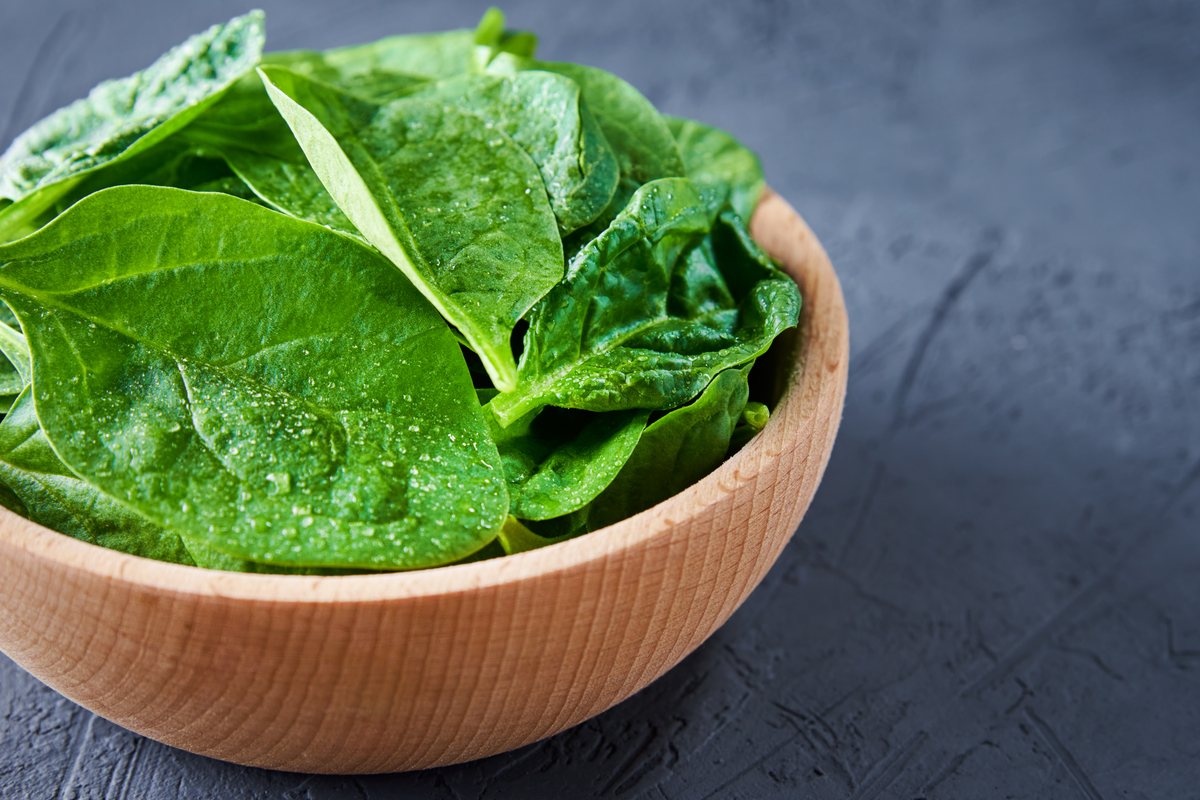
Folic acid gets its name from the leaf - Latin folium - because it was first isolated from spinach in 1941.
Spinach originated in Persia, where it has been cultivated for at least two thousand years. It spread to Spain via China and the Arab world, and then to Central Europe in the late Middle Ages. Catherine de' Medici is said to have loved it so much that dishes "à la Florentine" still refer to spinach today.
Its reputation as a source of iron persists—and with it, the legend that a misplaced decimal point increased the iron content tenfold. This story, too, is unsubstantiated; the myth surrounding the myth has itself become a lesson in the dangers of unverified quotations. The truth is: spinach contains about as much iron as other leafy greens, and according to the comic strip, Popeye ate it for its vitamin A.
To useWhat spinach does for you
Spinach is a Leafy greens with high nutrient density: lots of folate (important for cell division and during pregnancy), very much Vitamin K, Beta-carotene, lutein and zeaxanthin for the retina, magnesium, potassium and nitrate - at only about 23 kcal per 100 g.
In a large observational study, the cognitive abilities of people who ate a daily portion of leafy green vegetables aged more slowly—the difference was equivalent to about eleven years of life. This is a correlation, not proof, but a consistent result.
For the ironSpinach contains around 3 mg of iron per 100 g, but this is non-heme iron, which is further bound by oxalate. Only a small percentage is absorbed by the body. Combining spinach with vitamin C – lemon, bell pepper, orange – significantly improves absorption. However, it is still not suitable as a primary source of iron for those with iron deficiency.
IngredientsThis is what's in spinach
Spinach contains Folate, Vitamin K1, Beta-carotene, lutein, zeaxanthin, vitamin C, magnesium, potassium, iron and calcium - the latter, however, like iron, largely by Oxalic acid Bound. Oxalic acid also causes the dull feeling on the teeth.
Furthermore, spinach is a vegetables high in nitrates. When food is kept warm and cooled slowly, bacteria can convert nitrate to nitrite. That's why the old rule of not reheating spinach exists – it's excessive for healthy adults, but it applies to infants and toddlers: cool leftovers quickly, store them in the refrigerator, and reheat them only once.
Enhanced combinationsWhat makes spinach stronger
Spinach needs vitamin C for the iron, fat for the carotenoids, and some milk to counteract the oxalate.
Vitamin C improves iron absorption - lemon juice over spinach, bell peppers in salad.
Lutein and beta-carotene are fat-soluble - spinach with oil, butter or egg.
Calcium binds oxalate in the intestine - spinach with feta, ricotta or cream reduces oxalate absorption.
Blanching and discarding the water significantly reduces the oxalate content.
Creamed spinach with nutmeg, leaf spinach with garlic - the classics.
Spinach dal, chickpeas with spinach - protein, iron, folate in one pot.
What contradicts itselfIt's best to avoid these combinations.
Tannins further inhibit iron absorption - drink tea and coffee at a distance.
Spinach is one of the vegetables with the highest oxalate content - avoid it or blanch it if you are prone to stone formation.
Vitamin K affects coumarin-based blood thinners. Don't avoid it; instead, eat a balanced diet and have your INR level checked.
Nitrate can turn into nitrite - cool leftovers quickly, only reheat once.
Raw spinach smoothies provide a lot of oxalate - alternate with other greens.
Spinach needs seconds to a few minutes - otherwise it turns grey and loses folate.
In the kitchenWhere he belongs
- Creamed spinachWith onion, cream and nutmeg - served with fried egg and potatoes.
- Spinach with garlicIn olive oil, with lemon.
- Spinach dalRed lentils, spinach, turmeric, cumin.
- SpanakopitaGreek puff pastry with spinach and feta.
- Baby spinach saladWith strawberries or oranges, nuts and goat cheese.
- Saag PaneerIndian spinach with cream cheese.
- Spinach gnocchiWith ricotta, butter and sage.
- Eggs FlorentinePoached eggs on spinach with hollandaise sauce.
- Spinach quicheWith feta and pine nuts.
- Green smoothieBaby spinach, banana, kiwi, water - not every day.
As a home remedyThe iron-friendly spinach plate
Spinach with lentils and lemon
- Briefly blanch 200g of spinach leaves, drain, and squeeze out the excess liquid (this reduces the oxalate).
- Mix with 150g of cooked lentils, a diced red bell pepper and a little olive oil.
- Season with the juice of half a lemon, salt and pepper.
- Wait two hours before drinking coffee or black tea.
For people who eat a plant-based diet and want to improve their iron intake: lentils and spinach provide iron, bell peppers and lemon provide vitamin C, which significantly increases absorption, and blanching reduces oxalate.
As a meal several times a week. A confirmed iron deficiency requires medical treatment – diet alone is usually insufficient. Consult a doctor beforehand if you have oxalate stones or are taking warfarin (Marcumar).
Ayurveda & TCMWhat the old systems say
Ayurveda
Spinach (PalakyaIn Ayurveda, it is considered cooling, light, and somewhat drying. It can increase Vata and is therefore cooked and eaten with ghee and warming spices – as in the... Palak Paneer.
Traditional Chinese Medicine
In Traditional Chinese Medicine (TCM) spinach (Bo Cai) sweet and cool. It is said to nourish the blood, moisten dryness and clear the intestines - traditionally used for constipation, dry skin and dizziness due to lack of blood.
Warning noticesWhen you should be careful
Please note
- Blood thinners: Maintain a consistent intake of vitamin K while taking coumarins (Marcumar).
- Kidney stones: Very high in oxalates - avoid or blanch if you have calcium oxalate stones.
- Infants: Spinach only from weaning age onwards, cool leftovers quickly, reheat only once.
- Iron deficiency: Spinach is not a sufficient therapy.
- Gout: Moderate purine content - usually unproblematic in normal quantities.
This page provides information and does not replace medical advice. If symptoms persist, please consult a doctor.
Related to the topicRead on and cook along!
Shop links lead to our product pages; it is indicated there if a partner is involved.
SourcesWhat is this based on?
- Morris MC et al. Nutrients and bioactives in green leafy vegetables and cognitive decline: prospective study. Neurology 2018; 90(3): e214–e222.
- Mitchell HK, Snell EE, Williams RJ. The concentration of „folic acid“. Journal of the American Chemical Society 1941; 63(8): 2284.
- Sutton M. Spinach, iron and Popeye: ironic lessons from biochemistry and history on the importance of healthy eating, healthy skepticism and sloppy citation. Internet Journal of Criminology 2010.
- Federal Institute for Risk Assessment: Nitrate in food - questions and answers.
- USDA FoodData Central: Spinach, raw.


