
Tofu (soybean curd)
OriginQuark made from beans
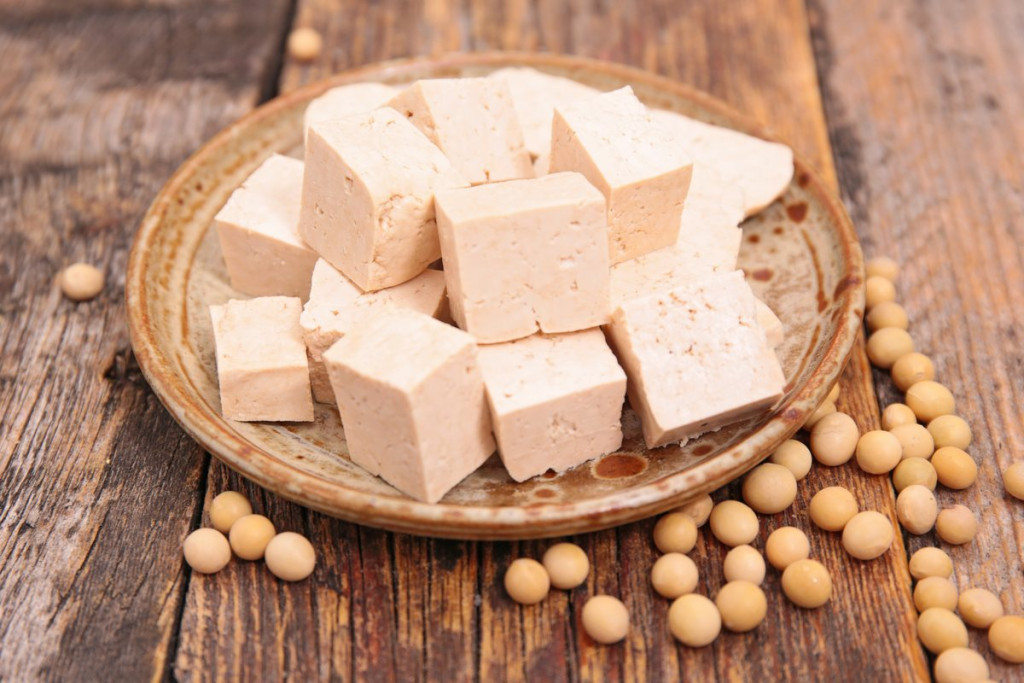
The word comes from Chinese: dòufu literally means "curdled bean".
According to legend, a prince of the Han Dynasty invented tofu as early as the 2nd century BC. Tofu's presence in China is reliably documented from around the 10th century. It spread to Japan, Korea, and Southeast Asia with Buddhist monks who abstained from meat, becoming a staple food there.
Tofu only became known in Europe in the 1970s, initially in organic food stores. Today, it is produced in large quantities in Germany, often from soybeans sourced from southern Germany, Austria, or other European countries. The basic principle remains the same: soak the soybeans, grind them, cook them, strain them, and then curdle and press the resulting soy milk using a coagulant. You can find more information about the plant itself on our soybean page.
To useWhat tofu does for you
Firm tofu provides 12 to 17 g of protein per 100 g, depending on the variety. protein containing all essential amino acids, 7 to 9 g predominantly unsaturated fat, approximately 2 to 3 mg iron and hardly any carbohydrates. Calcium The coagulant is the deciding factor: According to the USDA, tofu precipitated with calcium sulfate contains up to 680 mg per 100 g – more than milk – while tofu precipitated with nigari (magnesium chloride) often only contains 100 to 200 mg.
Tofu contains Isoflavones, Soy is a plant-based substance with a weak estrogen-like effect, containing approximately 20 to 30 mg per 100 g. In food quantities, it is considered safe; observational studies from Asia even suggest that high soy intake may be beneficial. However, the situation is different with high-dose, isolated isoflavones in dietary supplements: The German Federal Institute for Risk Assessment (BfR) advises women in menopause against long-term use.
Tofu is therefore a versatile, protein-rich food that can be a good substitute for meat. Its effectiveness against menopausal symptoms has not been proven.
IngredientsThis is what's in tofu
Tofu contains soy protein (primarily glycinin and β-conglycinin), fat rich in linoleic acid and containing some alpha-linolenic acid, lecithin, iron, magnesium, phosphorus, zinc, copper, vitamin B1 and folate, and – depending on the coagulant – high levels of calcium or magnesium. It also provides secondary plant compounds such as isoflavones like genistein and daidzein, as well as saponins.
During straining, almost all the fiber passes into the pulp (okara), so tofu itself is low in fiber. It is usually better tolerated than whole beans.
Enhanced combinationsWhat makes tofu stronger
Tofu tastes like what you give it - and with the right partners, it becomes a complete dish.
Marinating brings flavor inside.
It helps with iron absorption.
As a crust, it also provides calcium.
A filling main meal.
More fiber, a different bite.
Quickly in the wok.
What contradicts itselfIt's best to avoid these combinations.
Soy can reduce absorption - keep your distance.
Soy is a major allergen.
Isolates are not the same as food.
Press it beforehand, then it will be crispy.
In fresh water, for 2 to 3 days.
Calcium sulfate or nigari makes the difference when it comes to calcium.
In the kitchenWhere he belongs
- Fried tofuPressed, coated in starch, crispy.
- Tofu scrambled eggsCrumbled with turmeric.
- Mapo TofuSpicy from Sichuan.
- Miso soupWith silken tofu and spring onions.
- Stir-fried vegetablesWith broccoli and sesame seeds.
- CurrysThe tofu cubes soak up the sauce.
- Tofu bowlWith rice, vegetables and peanut sauce.
- Grilled tofuMarinated on the grill.
- Silken tofu creamAs a dessert with berries.
- salad dressingSilken tofu, pureed until creamy.
As a home remedyHomemade tofu
Homemade tofu
- Slowly heat 1 liter of unsweetened soy drink (made only from soybeans and water) to about 80 °C while stirring.
- Dissolve 1 teaspoon of nigari or calcium sulfate in 100 ml of warm water.
- Remove the pot from the heat and carefully stir in the coagulant in two portions, do not stir again and let it rest for 10 to 15 minutes until flakes form.
- Place the curd in a sieve lined with a cotton cloth and let it drain.
- Wrap the cloth, weigh it down, and press for 20 to 30 minutes. Store the finished tofu in cold water in the refrigerator.
For fresh tofu without additives - with calcium sulfate it's richer in calcium, with nigari it's more delicate in taste.
One liter of soy milk yields approximately 150 to 250 g of tofu. It will keep for 3 to 4 days when refrigerated in water that is changed daily.
Ayurveda & TCMWhat the old systems say
Ayurveda
Tofu is not described in classical Ayurveda. According to current understanding, it is considered cooling, heavy, and moist – balancing for Pitta, but better for Vata and Kapha when prepared warm and with ginger, cumin, or pepper.
Traditional Chinese Medicine
In Chinese nutritional theory, tofu is considered (DòufuIt is described as sweet and cooling. It is said to dispel heat, moisten dryness, and strengthen the digestive system. In cold weather, it is eaten fried with ginger.
Warning noticesWhen you should be careful
Please note
- Soy allergy: Soy is one of the 14 major allergens that must be declared in the EU. People with birch pollen allergies sometimes react to minimally processed soy products, rarely severely.
- Thyroid: Soy can reduce the absorption of levothyroxine. Take the hormone on an empty stomach, several hours apart from tofu, and keep soy consumption as consistent as possible; have your levels checked by a doctor.
- Isoflavone preparations: High-dose, isolated isoflavones are not comparable to tofu; the BfR advises women in menopause against long-term intake.
- Children: Tofu is a good food for children, but it does not replace special infant formula.
- Hygiene: Store opened tofu in fresh water and consume soon; discard tofu that smells sour.
This page provides information and does not replace medical advice. If symptoms persist, please consult a doctor.
Related to the topicRead on and cook along!
Shop links lead to our product pages; it is indicated there if a partner is involved.
SourcesWhat is this based on?
- Federal Institute for Risk Assessment (BfR): Isolated isoflavones are not without risk. Opinion No. 039/2007 of 3 April 2007, updated on 29 October 2007.
- EFSA Panel on Food Additives and Nutrient Sources added to Food (ANS): Risk assessment for peri- and post-menopausal women taking food supplements containing isolated isoflavones. EFSA Journal 2015; 13(10): 4246.
- Messina M. Soy and Health Update: Evaluation of the Clinical and Epidemiologic Literature. Nutrients 2016; 8(12): 754.
- Messina M, Redmond G. Effects of soy protein and soybean isoflavones on thyroid function in healthy adults and hypothyroid patients: a review of the relevant literature. Thyroid 2006; 16(3): 249–258.
- Regulation (EU) No 1169/2011 on the provision of food information to consumers, Annex II (substances that cause allergies or intolerances).
- USDA FoodData Central: Tofu, raw, firm, prepared with calcium sulfate; Tofu, firm, prepared with calcium sulfate and magnesium chloride (nigari).


