
Pumpkin seeds (Cucurbita pepo)
OriginStyria's green gold
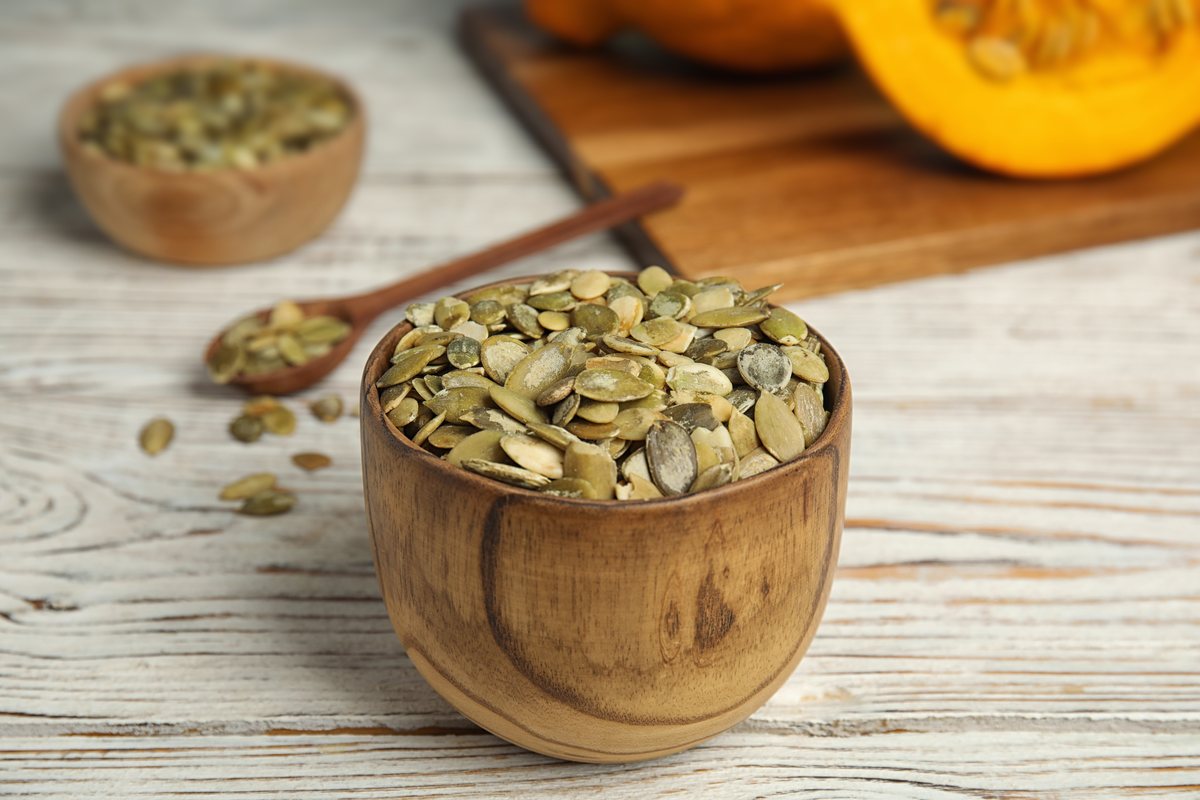
The hull-less oil pumpkin arose through a random mutation - only this made large-scale oil production possible.
Pumpkins are among the oldest cultivated plants in the Americas: In Mexico, pumpkin seeds were already being collected around 10,000 years ago, long before the flesh was eaten. With Columbus, the garden pumpkin came to Europe and quickly became established in Southeast Europe.
In Styria, a variety appeared in the 19th century whose kernels are surrounded only by a thin green membrane instead of a hard shell. From this Styrian oil pumpkin Green pumpkin seeds and dark green pumpkin seed oil, which is protected as "Styrian Pumpkin Seed Oil PGI", are still produced today. It is also cultivated in Germany, Hungary, and Slovenia, but a large proportion of the seeds sold commercially come from China.
To useWhat pumpkin seeds can do for you
100g of pumpkin seeds yield approximately 30g protein, approximately 49 g of fat - predominantly linoleic acid and oleic acid -, around 6 g of fiber and approximately 550 mg magnesium, 8 mg zinc and 8 mg iron. Just a handful of 30g covers a good third of the magnesium requirement and around a quarter of the zinc requirement. It also contains vitamin E, phytosterols and tryptophan.
Commission E describes pumpkin seeds as a medicinal drug in the context of Irritable bladder and urinary symptoms benign prostatic hyperplasia in stages I to II. The EMA's Committee on Herbal Medicinal Products (HMPC) classifies them as traditional herbal medicinal product One point – the application is therefore based on long-standing experience, not on conclusive proof of effectiveness. In a large, year-long study (GRANU), symptoms improved somewhat more with pumpkin seeds than with a placebo; the prostate itself did not shrink.
Important: Pumpkin seeds are not a substitute for medical advice. Urinary problems can have many causes, including serious ones – therefore, you should always consult a doctor first. However, pumpkin seeds are a very good, nutrient-rich addition to your daily diet.
IngredientsThis is what's in pumpkin seeds
Pumpkin seeds contain fatty oil with plenty of linoleic and oleic acid, protein with abundant arginine and tryptophan, fiber, phytosterols (especially delta-7 sterols), tocopherols (vitamin E), carotenoids such as lutein, lignans as well as magnesium, zinc, iron, phosphorus, potassium, manganese and copper.
The green color of Styrian pumpkin seeds and oil comes from the chlorophyll in the thin seed coat. Pumpkin seed oil is pressed from roasted seeds and is therefore very aromatic, but not suitable for frying.
Enhanced combinationsWhat makes pumpkin seeds stronger
Pumpkin seeds are a small upgrade everywhere - in salads, in bread, in muesli.
It helps extract iron from the kernels.
Styrian classic with lamb's lettuce.
Protein and magnesium to start.
Aroma like nuts, crunchy.
Or sprinkled on top.
Seeds and oil as a topping.
What contradicts itselfIt's best to avoid these combinations.
It loses its aroma and becomes bitter.
Preferably left in its natural state.
Plenty of energy - a handful is enough.
They become rancid.
Always get bladder problems checked out by a doctor.
Pay attention to origin and quality.
In the kitchenWhere they belong
- Styrian saladWith pumpkin seed oil and seeds.
- pumpkin seed breadMade with whole wheat flour.
- Muesli and porridgeWith apple and cinnamon.
- Pumpkin soupTopped with roasted kernels.
- Pumpkin seed pestoWith parsley or wild garlic.
- Pumpkin seed pasteAs a spread for bread.
- Roasted kernelsServed with paprika and salt as a snack.
- pumpkin seed breadingFor vegetables or fish.
- Vanilla ice cream with pumpkin seed oilStyrian specialty.
- Salad toppingOver arugula or lamb's lettuce.
As a home remedyPumpkin seeds for bladder and prostate
Pumpkin seed cure
- Have a doctor determine the cause of the urinary problems.
- Eat 10g of pumpkin seeds daily (about 1 heaped tablespoon), morning and evening, chew thoroughly.
- The kernels can be eaten whole, coarsely ground, or in muesli.
- Continue using the application for several weeks to months - if any effect appears at all, it will only be slowly.
Traditionally used to relieve symptoms of overactive bladder and urinary problems caused by a benignly enlarged prostate (stages I to II), after serious underlying causes have been ruled out. The kernels only relieve symptoms; they do not shrink the prostate.
According to Commission E, 10 g of semen per day; standardized finished products according to the package insert. Consult a doctor immediately if blood appears in the urine, fever, pain, urinary retention, or if symptoms worsen.
Ayurveda & TCMWhat the old systems say
Ayurveda
In Ayurveda, pumpkin seeds are considered sweet, slightly warming, and nourishing. They are used to strengthen the body and support the urinary tract, and are considered balancing for Vata, but in larger quantities, they are considered heavy for Kapha.
Traditional Chinese Medicine
In Traditional Chinese Medicine (TCM), pumpkin seeds are called Nan Gua Zi. They are considered sweet and neutral, have a beneficial effect on the stomach and large intestine, and were traditionally used primarily against intestinal worms such as tapeworms.
Warning noticesWhen you should be careful
Please note
- Doctor's visit: Always consult a doctor if you experience problems with urination - pumpkin seeds are not a substitute for diagnosis.
- Warning signs: If you experience blood in your urine, fever, pain, or urinary retention, see a doctor immediately.
- Allergy: Rare; cross-reactions with other cucurbits are possible.
- Energy: very high in fat and calories; a handful a day is sufficient.
- Quality: Discard any kernels that smell rancid or are moldy.
This page provides information and does not replace medical advice. If symptoms persist, please consult a doctor.
Related to the topicRead on and cook along!
Shop links lead to our product pages; it is indicated there if a partner is involved.
SourcesWhat is this based on?
- Commission E: Monograph Cucurbitae peponis semen (pumpkin seeds). Federal Gazette 1985, amended 1991.
- European Medicines Agency, Committee on Herbal Medicinal Products (HMPC): Community herbal monograph on Cucurbita pepo L., semen. EMA/HMPC/136024/2010.
- Vahlensieck W et al. Effects of pumpkin seed in men with lower urinary tract symptoms due to benign prostatic hyperplasia in the one-year, randomized, placebo-controlled GRANU study. Urologia Internationalis 2015; 94(3): 286–295.
- USDA FoodData Central: Seeds, pumpkin and squash seed kernels, dried.
- German Nutrition Society (DGE): Reference values for nutrient intake - magnesium and zinc.


