Pumpkin (Cucurbita maxima)
OriginTen thousand years old
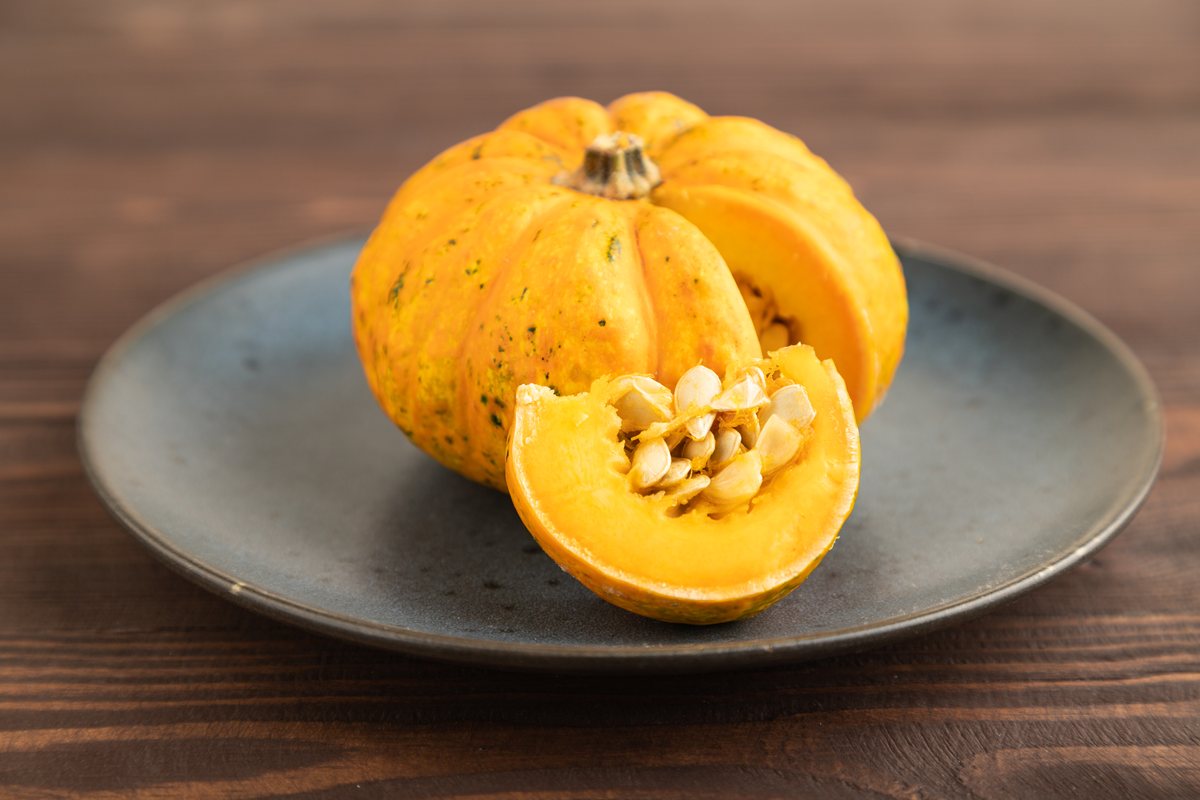
In a cave in Mexico, archaeologists found pumpkin seeds from cultivated pumpkins that are around ten thousand years old - older than corn and beans.
Pumpkins originated in America. Cucurbita pepo The squash – which also includes zucchini and ornamental gourds – was domesticated in Mexico about ten thousand years ago, initially probably for its nutritious seeds and as a container. Along with maize and beans, the squash formed the "Three Sisters" of indigenous agriculture: maize provides support, beans fix nitrogen, and squash shades the soil.
Pumpkins arrived in Europe in the 16th century. Today, the main distinction is between giant pumpkins (C. maxima, including Hokkaido), garden pumpkins (C. pepo, including the Styrian oil pumpkin) and butternut squash (C. moschata, plus butternut). The Styrian oil pumpkin is special: its seeds have no hard shell and yield the dark green pumpkin seed oil.
To useWhat the pumpkin does for you
Pumpkin flesh is light and rich in caroteneDepending on the variety, it contains 20 to 40 kcal per 100 g, plus plenty of beta-carotene (especially Hokkaido and butternut squash), potassium, vitamin C, vitamin E, and fiber. It is easily digestible, filling, and suitable as a complementary food for babies.
The actual medicinal plants are the pumpkin seeds. The European Medicines Agency (HMPC) and previously Commission E have recognized pumpkin seeds as a traditional herbal medicinal product for the relief of symptoms of overactive bladder and urinary retention caused by benign prostatic hyperplasia (BPH). In a large study with over 1,400 men, pumpkin seeds alleviated symptoms more effectively than a placebo over a period of twelve months.
The seeds also provide protein, magnesium, zinc, iron, and unsaturated fatty acids – a nutritious addition as a snack or to salads. Their effectiveness in addressing prostate problems does not replace medical evaluation, as other conditions could be the underlying cause.
IngredientsThis is what's inside the pumpkin
The pulp contains mostly water, Beta-carotene and alpha-carotene, potassium, vitamin C, vitamin E, fiber, and a little sugar. The skin of the Hokkaido pumpkin is thin and softens when cooked – it is eaten along with the flesh and provides additional fiber.
The kernels They contain around 30 percent protein and about 45 percent fat, primarily linoleic acid, as well as phytosterols, vitamin E, magnesium, zinc, and iron. Cultivated pumpkins are bred in such a way that they do not contain these nutrients. Cucurbitacins more of these very bitter substances are found in ornamental gourds and can reappear through crossbreeding.
Enhanced combinationsWhat makes the pumpkin stronger
Pumpkin likes fat, warmth and acidity - and its seeds are always part of the equation.
Beta-carotene is fat-soluble - pumpkin soup with cream, coconut milk or pumpkin seed oil.
Pumpkin and ginger soup: Spicy versus sweet.
The pumpkin spice mix - in cakes, but also in soups.
A few drops of Styrian pumpkin seed oil over the soup - nutty and green.
Pumpkin ravioli or gnocchi with sage butter.
Oven-baked pumpkin with salty cheese and sour seeds.
What contradicts itselfIt's best to avoid these combinations.
Cucurbitacins make pumpkin bitter and can cause severe gastrointestinal poisoning. Cooking does not destroy them.
Ornamental gourds contain cucurbitacins. Even gourds grown from homegrown seeds may have crossbred with them.
Only the Hokkaido pumpkin has a soft skin - butternut and muscat pumpkins need to be peeled.
Seeds are high in fat and calories - a handful a day.
Cut pumpkin molds quickly - store it in foil in the refrigerator and consume it within a few days.
Always have any problems with urination checked by a doctor before attempting self-treatment.
In the kitchenWhere he belongs
- Pumpkin soupHokkaido pumpkin with onion, ginger, coconut milk, pumpkin seed oil.
- Oven-roasted pumpkinIn wedges with rosemary, olive oil, feta.
- Pumpkin risottoWith Parmesan and sage.
- Pumpkin curryWith chickpeas, coconut milk and turmeric.
- Pumpkin gnocchiWith sage butter.
- Pumpkin PieAmerican pumpkin pie with cinnamon and cloves.
- Pumpkin breadYeast dough with pumpkin puree - bright yellow.
- Roasted kernelsBaked in the oven with salt and a little paprika.
- Pumpkin chutneyWith apple, ginger and vinegar.
- Pumpkin seed oil saladLamb's lettuce with pumpkin seed oil and seeds.
As a home remedyPumpkin seeds for irritable bladder
Pumpkin seeds as a cure
- Chew 10g of unroasted, unsalted pumpkin seeds (about one heaped tablespoon) thoroughly every day.
- Half in the morning and half in the evening, or spread over muesli and salad.
- Alternatively, one tablespoon of crushed kernels twice a day.
- Continue for at least three months - the effect will set in slowly.
Symptoms of an overactive bladder and urinary problems caused by early-stage benign prostatic hyperplasia (BPH). Recognized as a traditional herbal medicinal product by the European Medicines Agency (HMPC).
10g of kernels per day. Consult a doctor beforehand – blood in the urine, pain, fever, sudden urinary retention, or very frequent urination at night always warrant a visit to the doctor. The kernels reduce symptoms, not the size of the prostate.
Ayurveda & TCMWhat the old systems say
Ayurveda
The pumpkin (Kushmanda, The wax gourd (actually the wax gourd) is considered sweet, cooling, and nourishing in Ayurveda. It calms Pitta and Vata and is regarded as a tonic for mind and body; the seeds are traditionally used against worms.
Traditional Chinese Medicine
In Traditional Chinese Medicine (TCM), the pumpkin (Nan Gua) sweet and warm. It is said to strengthen the center, replenish Qi, and loosen phlegm. The pumpkin seeds (Nan Gua Zi) are a classic remedy against tapeworms.
Warning noticesWhen you should be careful
Please note
- Bitter taste: Spit out bitter-tasting pumpkin immediately and do not eat it (cucurbitacins).
- Ornamental pumpkins: Not edible; do not collect seeds from ornamental gourds growing nearby.
- Prostate: Have any complaints checked by a doctor before attempting self-treatment.
- Cores: High in calories; avoid during an acute flare-up of diverticulitis.
- Allergy: rare, possible on pumpkin seeds.
This page provides information and does not replace medical advice. If symptoms persist, please consult a doctor.
Related to the topicRead on and cook along!
Shop links lead to our product pages; it is indicated there if a partner is involved.
SourcesWhat is this based on?
- Smith BD. The initial domestication of Cucurbita pepo in the Americas 10,000 years ago. Science 1997; 276(5314): 932-934.
- HMPC. Community herbal monograph on Cucurbita pepo L., semen. European Medicines Agency 2012.
- Vahlensieck W et al. Effects of pumpkin seed in men with lower urinary tract symptoms due to benign prostatic hyperplasia in the one-year, randomized, placebo-controlled GRANU study. Urologia Internationalis 2015; 94(3): 286–295.
- Federal Institute for Risk Assessment: Do not eat bitter zucchini and pumpkins. Consumer information 2015.
- USDA FoodData Central: Pumpkin, raw and Seeds, pumpkin and squash seed kernels, dried.