
OriginThe weed that isn't one
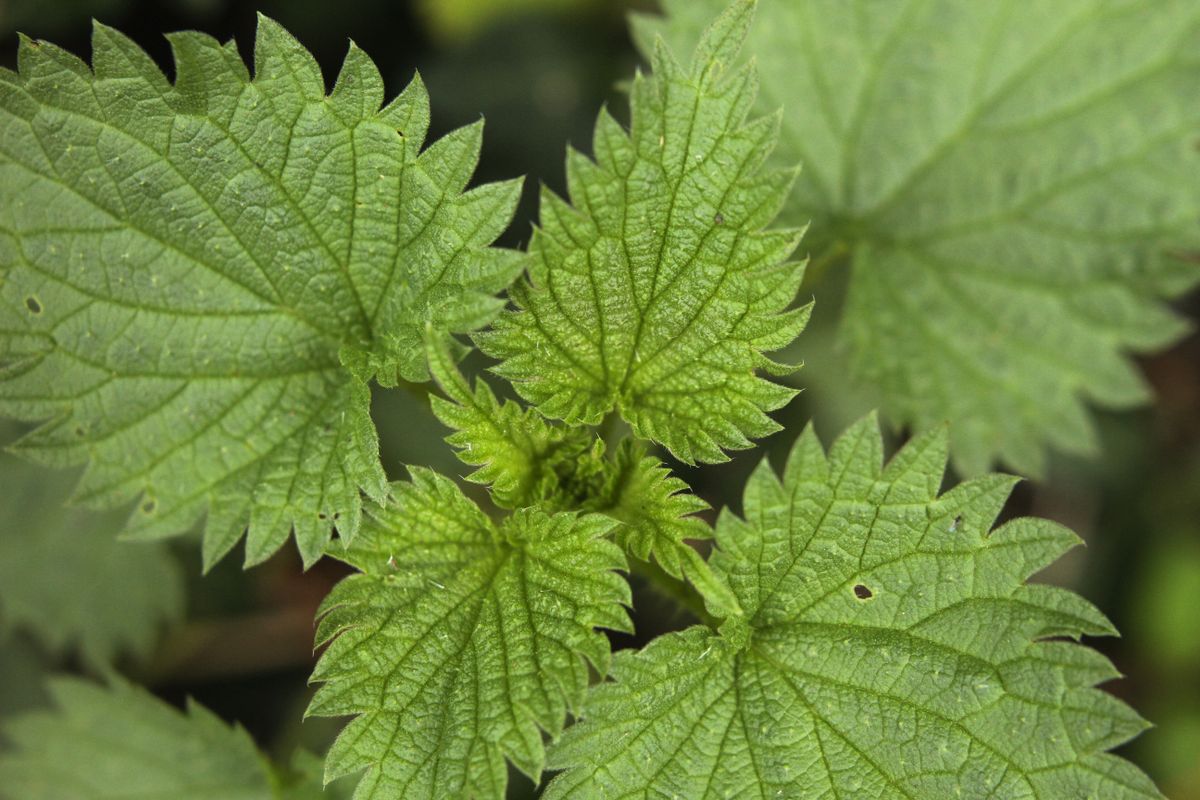
Where nettles grow, there was life: they indicate nitrogen-rich soils – old farmsteads, compost heaps, pastures. They have followed humans since the beginning of settlements.
The stinging nettle grows worldwide in temperate zones and is a classic indicator plant for nitrogen-rich, disturbed soils: forest edges, roadsides, stream banks, old farmsteads, compost heaps. It is dioecious – male and female flowers are on separate plants – which can be seen in the flower heads: those of the female plants hang limply, while those of the male plants stand upright. Besides it, there is the dwarf nettle (Urtica urens), annual, smaller and often burning even more intensely.
Its history of use extends far beyond medicine. For centuries, the stem fibers were used to make... nettle cloth Woven – during the First World War, Germany resorted to nettle fabric when cotton was scarce, producing millions of meters of it for uniforms. Green dye was extracted from the leaves, and yellow from the root. In agriculture, nettle manure remains a standard product in organic gardens, and for numerous butterfly caterpillars – peacock, small tortoiseshell, and red admiral – it is the sole food source.
For centuries, nettle leaves were the staple food in spring when stores were depleted and nothing else was growing. This wasn't just a last resort: nettle leaves are among the most nutrient-rich leafy vegetables available – with more iron than spinach, plenty of calcium, vitamins A and C, and a remarkable protein content for a leaf. A spring cleanse with nettles, therefore, has a very solid foundation.
To useWhat the stinging nettle can do for you
With stinging nettles, you have to differentiate between different parts of the plant because they can do three different things. Sheet is listed with the European Medicines Agency as a traditional use for Flushing of the urinary tract It is used for mild symptoms and to prevent kidney stones, as well as to support the treatment of rheumatic complaints. The diuretic effect is easily understood and stems primarily from the flavonoids and the high potassium content. As with any flushing therapy, the essential part of the effect comes from the amount of fluid consumed, and without sufficient fluid intake, it is ineffective.
The root This is a completely different issue and has a better data basis. It will be addressed at benign prostatic hyperplasia It is used in stages I and II – that is, for urinary problems, frequent nighttime awakenings, and a weak urine stream. Commission E has given it a positive assessment, and there are clinical studies, including those on combinations with saw palmetto fruit, that show relief from these symptoms. The following sentence is important and should not be omitted: The plant alleviates symptoms, it does not shrink the prostate. - and an enlarged prostate should be medically evaluated before any self-treatment, because other conditions may be the underlying cause.
And then there are the seeds, These tiny nuts from the female flower heads have been rightly rediscovered in recent years. They are extremely nutrient-dense, containing protein, unsaturated fatty acids, vitamin E, carotenoids, and minerals. In folk medicine, they were considered invigorating and are now often sprinkled over muesli, salads, and bread. However, there are no reliable studies on this – it's a good food, not a medicine, and should be treated as such.
IngredientsThis is what's in the stinging nettle
First, what everyone knows: the Burn. The stinging hairs are tiny silica capillaries with a slanted head that breaks off upon contact, leaving behind a sharp cannula – the plant literally injects its contents under the skin. These contain primarily... histamine, Serotonin and Acetylcholine, ...and also formic acid and oxalic acid. The old school wisdom that it's "just formic acid" is therefore too simplistic: the burning sensation is a small cocktail injection. Mechanical destruction of the hair – rolling, kneading, chopping, blanching – reliably stops it.
The leaves They contain flavonoids (quercetin, rutin, kaempferol), silica, chlorophyll, carotenoids, plenty of potassium and calcium, readily available iron, as well as vitamins C and K. The high vitamin K content is the reason for a practical tip: those taking coumarin-type blood thinners should not suddenly change the dosage drastically.
The root It has a completely different profile: It contains lignans, sterols – especially β-sitosterol – polysaccharides, and a specific lectin. Its effects on hormone metabolism and prostate tissue are being discussed; the mechanism is not yet fully understood, but its clinical impact on symptoms has been studied extensively. seeds Finally, they consist of about a quarter protein and contain plenty of linoleic acid and vitamin E.
Enhanced combinationsWhat makes the stinging nettle stronger
One herb for all three culinary styles – raw, cooked, and dried. The crucial factor is what you do with the stinging hairs.
Place fresh leaves on a board and roll them over until they shine - the stinging hairs break and the leaves are edible raw.
At least two liters of fluid per day - without this, flushing therapy is pointless.
The classic kidney tea blend - three plants in the same direction.
The iron from the leaf is absorbed much better with a squeeze of lemon or paprika.
Nettle soup and nettle spinach: Fat rounds off the slightly bitter, mineral note.
Briefly roast the ripe seeds in a dry pan - they will become nutty and keep for months.
What contradicts itselfIt's best to avoid these combinations.
It thrives where it is fertilized and marked – choose the location carefully and wash thoroughly.
From the flowering stage onwards, cystoliths form, small calcium deposits that can irritate the kidneys - take young shoot tips.
Increasing fluid intake is not advisable in this case - consult a doctor first.
The vitamin K level can shift the setting - keep the amount constant and discuss it.
Problems with urination should be investigated before being treated with a plant.
Unrolled raw leaves burn in the mouth and on the esophagus - this is unpleasant and unnecessary.
To which courtWhere she belongs
- Nettle soupCook young shoot tips with onion and potato until soft, purée, and finish with cream.
- Nettle spinachLike spinach braised in butter, with nutmeg and a squeeze of lemon.
- Nettle pestoBlanched leaves with sunflower seeds, oil, garlic and cheese - keeps for two weeks in the refrigerator.
- Nettle chipsBrush the leaves with oil, salt them, and bake them in the oven at 150 degrees until crispy - surprisingly good.
- Spring cureDrinking tea or fresh greens daily for two to three weeks is the old practice after winter.
- Kidney teaWith goldenrod and horsetail, boiled or steeped.
- Nettle seedsRoasted over muesli, salad, soup or in bread dough.
- Green smoothieRolled leaves with apple and banana - raw and without burning.
- Nettle root teaAs a decoction for prostate problems - as an accompaniment to medical treatment.
- Plant manureOne kilogram of fresh herbs to ten liters of water, ferment for two weeks - fertilizer and aphid repellent in one.
As a home remedyThe spring cure
Nettle tea as a flushing treatment
- Place two teaspoons of dried nettle leaves - or a small handful of fresh, young shoot tips - into a cup.
- Pour 250 ml of boiling water over it and let it steep, covered, for ten minutes.
- Strain and drink three cups throughout the day, along with at least two liters of additional water.
- The treatment should last two to three weeks, then be followed by a break. Traditionally, this is done in spring when the first shoots appear.
For flushing the urinary tract, for preventing kidney stones, and as a spring tonic after winter. To be honest: the diuretic effect is real, but most of the effect comes from the amount of fluid consumed. What nettle also offers is its mineral and vitamin profile – and this is significantly better in fresh greens than in tea.
Three cups daily for two to three weeks. Not suitable for patients with impaired heart or kidney function., Because increased fluid intake can then be harmful. Those taking coumarin-type blood thinners should not suddenly change the dosage drastically due to the vitamin K content. Burning during urination accompanied by fever, flank pain, or blood in the urine requires immediate medical attention.
Ayurveda & TCMWhat the old systems say
Ayurveda
The European stinging nettle is not a classic ingredient in Ayurveda, but there is an Indian relative., Urtica parviflora, which is used in the Himalayas. Classified according to its properties, stinging nettle would be astringent, slightly bitter, and warming: reducing Kapha and Vata, and increasing Pitta in larger quantities. As a cleansing, blood-building spring herb, it fits well into the Ayurvedic concept of seasonal cleansing – a transfer of principle, not a tradition.
Traditional Chinese Medicine
In the Chinese Materia Medica, the stinging nettle is listed as Qian Ma It is only marginally cultivated and plays hardly any role in classical practice. Based on its nature, it would be a sharp, warming herb that dispels wind-dampness and opens the meridians – similar to herbs used for rheumatic complaints. The historical European practice of striking aching joints with fresh nettles follows precisely this logic.
Warning noticesWhen you should be careful
Please note
- Heart and kidneys: Flushing therapy is not suitable for patients with impaired heart or kidney function.
- Blood thinners: The high vitamin K content can affect the level of coumarins - keep the amount constant and discuss it.
- Prostate problems: Consult a doctor before self-treatment; the root relieves symptoms but does not treat the cause.
- Collection points: Do not collect on dog paths, roadsides and fertilized areas.
- Flowering plants: Cystoliths form from flowering onwards, which can irritate the kidneys - prefer young shoot tips.
- Pregnancy: It is safe to consume as a vegetable, but it is advisable to avoid using it in treatments and root preparations.
This page provides information and does not replace medical advice. If symptoms persist, please consult a doctor.
Related to the topicRead on and cook along!
Shop links lead to our product pages; it is indicated there if a partner is involved.
SourcesWhat is this based on?
- EMA/HMPC: European Union herbal monograph on Urtica dioica L., folium - traditional use for flushing the urinary tract and as a supportive treatment for rheumatic complaints.
- Commission E: Monograph Urticae radix (nettle root), Federal Gazette 1986 - Micturition problems in prostatic adenoma stage I to II.
- Blaschek W (ed.): Wichtl - Herbal drugs and phytopharmaceuticals. 6th edition 2016, Monographs Urticae folium and Urticae radix.
- Safarinejad MR. Urtica dioica for treatment of benign prostatic hyperplasia: a prospective, randomized, double-blind, placebo-controlled, crossover study. Journal of Herbal Pharmacotherapy 2005; 5(4): 1–11.
- USDA FoodData Central: Nettles, blanched - Nutrient content of the leaves.


