Okra (Abelmoschus esculentus)
OriginFrom Ethiopia to Louisiana
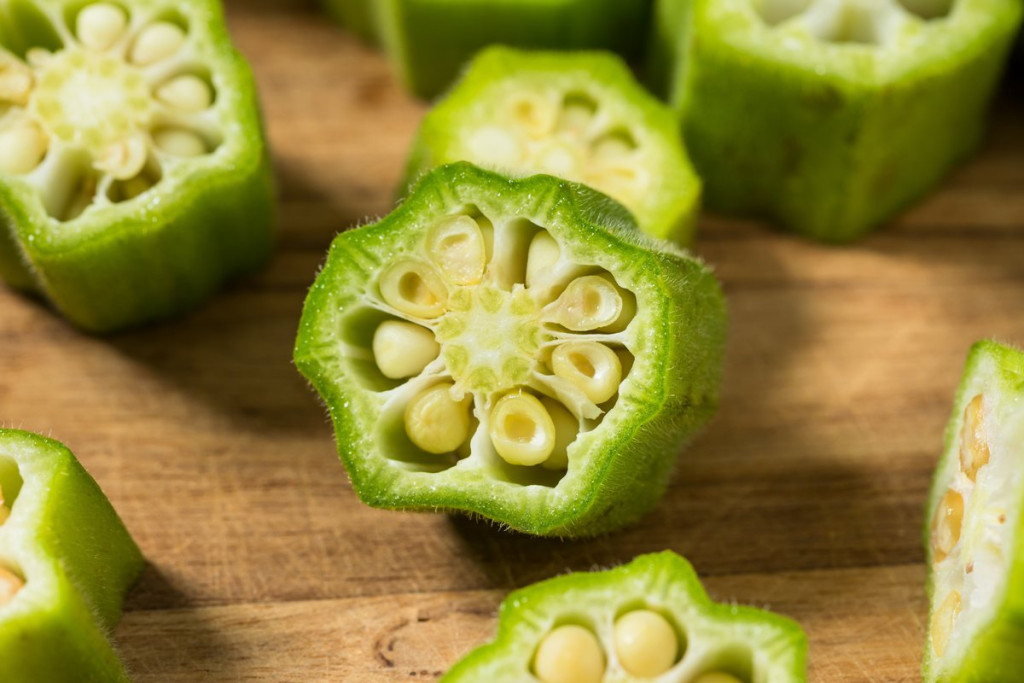
The name "Gumbo" for the Louisiana stew probably derives from a Bantu word for okra.
Okra likely originated in the highlands of Ethiopia or Sudan and was already cultivated in ancient Egypt. From there it spread through Arabia to India, where it was used as Bhindi to this day it is one of the most popular vegetables, and around the Mediterranean - in Turkey and in Greece it is called Bamya or Bamies.
Okra came to America through the slave trade. In the southern United States and the Caribbean, it became the basis of Creole stews like gumbo and callaloo. In Germany, okra only grows in warm greenhouses or during very hot summers; almost all commercially available pods come from southern Europe, Turkey, Africa, India, or Latin America.
To useWhat okra does for you
100g of raw okra provides only about 33 kcal, plus about 3g of carbohydrates. Dietary fiber, approximately 30 µg Vitamin K (approximately half of a woman's daily requirement), around 60 µg Folate and, depending on the variety, 20 to 35 mg of vitamin C. It also contains magnesium, calcium, potassium, and manganese.
The Mucus Okra is a soluble dietary fiber made up of sugar chains and protein. It promotes satiety, softens stools, and can slightly reduce the rise in blood sugar after a meal. Animal studies and some small trials from Asia and the Middle East suggest beneficial effects on blood sugar and blood lipids – however, the results are inconsistent and the studies are mostly small, often using okra powder instead of the vegetable.
Honestly, okra is primarily a good, high-fiber vegetable with plenty of vitamin K and folate. Those taking anticoagulants like warfarin (Marcumar) should maintain a consistent vitamin K intake, and those prone to kidney stones should avoid okra because of its high vitamin K content. Oxalates Do not eat in large quantities.
IngredientsThis is what's in okra
Okra contains water, dietary fiber (primarily mucilage-forming polysaccharides from rhamnose, galactose and galacturonic acid, as well as pectin), some protein, vitamin K, folate, vitamin C, vitamin B1 and B6, magnesium, calcium, potassium, manganese, oxalic acid, and polyphenols such as quercetin glycosides and catechins.
The small seeds inside provide protein and oil; roasted, they were even used as a coffee substitute in the past. The mucilage is located in the pulp and is released as soon as the pod is cut.
Enhanced combinationsWhat makes okra stronger
Okra loves heat, acidity and strong spices - and becomes either crunchy or creamy depending on how it is prepared.
Acid slows down mucus production.
Vitamin K is fat-soluble.
Stays crisp, hardly any slime.
Like in the Indian Bhindi Masala.
Makes a complete stew.
It helps with iron absorption from vegetables.
What contradicts itselfIt's best to avoid these combinations.
Whole pods stay drier.
It quickly becomes stained and soft.
Woody and fibrous.
Okra contains oxalate.
Maintain a consistent level of vitamin K.
Okra turns dark.
In the kitchenWhere she belongs
- gumboLouisiana stew.
- Bhindi MasalaIndian-style fried with onions.
- BamyaTurkish style, braised with tomatoes.
- Oven-baked okraWhole, with oil and salt.
- Okra chipsThinly sliced, crispy.
- CallalooCaribbean vegetable stew.
- Okra with lambMiddle Eastern stew.
- Okra curryWith coconut milk.
- Grilled okraOn a spit.
- Okra TempuraIn light dough.
As a home remedyOkra water: popular, but little documented
Okra water
- Wash 2 to 3 fresh okra pods and cut them lengthwise.
- Place in a glass with about 250 ml of water and cover, then let it steep overnight in the refrigerator.
- In the morning, remove the pods and drink the slightly slimy water.
- Don't throw away the pods afterwards, but cook them along with the rest of the dish.
Okra water is a traditional remedy from Asia and Africa, often recommended to support digestion and blood sugar levels. The mucilage is a mild bulking agent; however, there is no evidence that the water significantly lowers blood sugar in humans.
A glass in the morning. Those taking blood sugar-lowering medication should monitor their levels. A whole pod on the plate is better than just water.
Ayurveda & TCMWhat the old systems say
Ayurveda
In Ayurveda, okra is called Bhindi. It is considered sweet, cooling and mucousy, calms Vata and Pitta and is appreciated for dry digestion; for Kapha only when well spiced.
Traditional Chinese Medicine
In Traditional Chinese Medicine (TCM) okra (Qiu KuiAccording to more recent teachings, it is described as cool and sweet. It is said to moisten the humors and keep the intestines supple.
Warning noticesWhen you should be careful
Please note
- Blood thinners: Okra contains a lot of vitamin K - if you are taking Marcumar or Warfarin, keep the intake consistent and do not change it drastically.
- Kidney stones: Okra is one of the vegetables with a higher oxalate content; if you have calcium oxalate stones, eat it only in normal quantities and together with calcium-rich foods.
- Flatulence: Fiber and fructans can cause bloating in people with irritable bowel syndrome - test with small amounts.
- Medications: Do not combine okra powder or okra water with diabetes medication without monitoring blood sugar levels.
- Skin: The fine hairs of the pods can irritate the skin when cleaning - wear gloves if you have sensitive skin.
This page provides information and does not replace medical advice. If symptoms persist, please consult a doctor.
Related to the topicRead on and cook along!
Shop links lead to our product pages; it is indicated there if a partner is involved.
SourcesWhat is this based on?
- Elkhalifa AEO et al. Okra (Abelmoschus esculentus) as a potential dietary medicine with nutraceutical importance for sustainable health applications. Molecules 2021; 26(3): 696.
- Gemede HF et al. Nutritional quality and health benefits of okra (Abelmoschus esculentus): a review. Journal of Food Processing & Technology 2015; 6:458.
- USDA FoodData Central: Okra raw.
- German Nutrition Society (DGE): Reference values for nutrient intake - Vitamin K and folate.