
Mandarin (Citrus reticulata)
OriginThe fruit of the mandarin orange
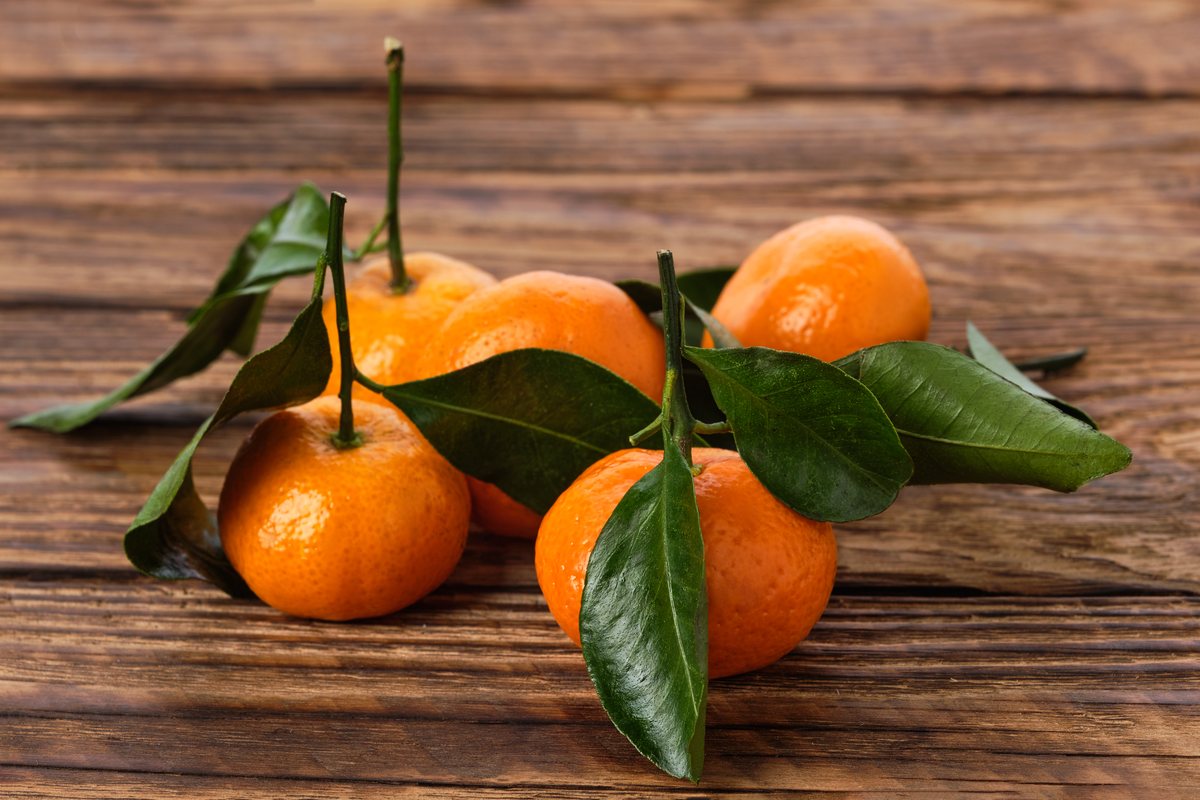
The name is reminiscent of the Chinese officials, the „Mandarin“ – perhaps because of their orange robes.
The mandarin orange is one of the earliest forms of citrus fruits: crossbreeding with the pomelo later gave rise to the orange, bitter orange, and grapefruit. It has been cultivated in southern China for more than 3,000 years, but only arrived in Europe at the beginning of the 19th century.
The shops today mainly stock their descendants: The Clementine It is a cross between a mandarin orange and an orange, firmer, usually seedless, and somewhat more acidic. satsuma Originating in Japan, it is very mild, thin-skinned, and almost always seedless. The true mandarin orange has more seeds and a particularly intense aroma.
To useWhat tangerines can do for you
100g of mandarin oranges provide approximately 27mg Vitamin C Two fruits therefore cover about a third of the daily requirement. In addition, they contain a particularly high amount of vitamin D, around 400 µg per 100 g. Beta-cryptoxanthin, a carotenoid that the body can convert into vitamin A and which is apparently well absorbed.
The white skin and especially the peel contain flavonoids: Hesperidin and the methoxylated flavones Nobleman and tangeretin. In laboratory and animal studies, they have anti-inflammatory effects and a beneficial effect on metabolism; however, robust studies in humans are still largely lacking.
With approximately 50 kcal per 100 g, the mandarin orange is a light snack. It is not a substitute for therapy, but it is an easy way to eat fresh fruit regularly in winter.
IngredientsThis is what's inside the tangerine
The pulp contains sugars, fruit acids, vitamin C, folate, potassium, dietary fiber (especially pectin in the skins) and carotenoids, most notably beta-cryptoxanthin.
The peel contains essential oil with a high limonene content, as well as hesperidin, narirutin, nobiletin, and tangeretin. Conventional produce also contains preservatives on the peel, such as... Thiabendazol or Imazalil, which are applied to combat mold after harvesting.
Enhanced combinationsWhat makes tangerines stronger
Mandarins go well with both sweet and savory dishes - and bring vitamin C to the table.
Vitamin C helps with plant iron.
Carotenoids are absorbed better.
Fresh and slightly bitter.
A classic in winter.
Protein and fruit.
Just for tea and cake.
What contradicts itselfIt's best to avoid these combinations.
Thiabendazole and imazalil remain.
Wash hands after peeling, especially children.
Fruit acid can be irritating.
Often in sugar syrup.
Acid - wait 30 minutes.
Less fiber.
In the kitchenWhere she belongs
- Pure as a snackDuring Advent.
- fruit saladWith apple and pomegranate.
- Fennel saladWith mandarin orange segments.
- MuesliWith rolled oats.
- Mandarin yogurtWith cinnamon.
- CheesecakeWith mandarins in the ground.
- Asian sauceWith ginger and soy sauce.
- Winter saladWith lamb's lettuce and walnuts.
- ChutneyWith onions and spices.
- abrasionFrom the organic peel in the pastry.
As a home remedyMandarin peel tea for bloating
Mandarin peel tea
- Wash the peel of 1 to 2 organic mandarins thoroughly with hot water and cut into strips, leaving the white inner skin on.
- Use fresh or allow to air dry for a few days.
- Pour 250 ml of hot water over 1 teaspoon of dried or 1 tablespoon of fresh peel.
- Cover and let steep for 10 minutes, strain and drink in small sips after meals.
For use after a heavy meal when experiencing bloating and mild gas. The essential oils and bitter substances in the peel are traditionally used to aid digestion – this is not well-documented, but the tea is mild and well-tolerated.
1 to 2 cups a day. Use only untreated peel. Consult a doctor if symptoms persist.
Ayurveda & TCMWhat the old systems say
Ayurveda
In Ayurveda, mandarins are considered sweet-sour and cooling. They are said to calm Vata and, in moderation, also benefit Pitta; Kapha should consume them sparingly, and preferably not in the evening.
Traditional Chinese Medicine
In Traditional Chinese Medicine (TCM), dried, ripened mandarin peel is used as Chen Pi (Citri reticulatae pericarpium) is a classic remedy. It is considered warm, pungent, and bitter, and is said to move the Qi of the spleen and stomach and resolve "dampness and phlegm"—for example, in cases of bloating, nausea, and chesty coughs. The older the peel, the more highly it is valued.
Warning noticesWhen you should be careful
Please note
- Peel: Conventional mandarins are usually treated with thiabendazole or imazalil - do not eat the peel, wash your hands after peeling.
- Labeling: Goods treated after harvesting must be labelled, for example with „preserved with …“; for tea and shavings only organic or „untreated“.
- Stomach: Fruit acids can irritate those suffering from heartburn or reflux.
- Teeth: Acid attacks tooth enamel - drink water afterwards instead of brushing immediately.
- Allergy: Rare, avoid if you have a citrus allergy.
This page provides information and does not replace medical advice. If symptoms persist, please consult a doctor.
Related to the topicRead on and cook along!
Shop links lead to our product pages; it is indicated there if a partner is involved.
SourcesWhat is this based on?
- USDA FoodData Central: Tangerines, (mandarin oranges), raw.
- Burri BJ. Beta-cryptoxanthin as a source of vitamin A. Journal of the Science of Food and Agriculture 2015; 95(9): 1786–1794.
- Yu X et al. Citri Reticulatae Pericarpium (Chenpi): Botany, ethnopharmacology, phytochemistry, and pharmacology of a frequently used traditional Chinese medicine. Journal of Ethnopharmacology 2018; 220: 265–282.
- Regulation (EC) No 396/2005 on maximum levels of pesticide residues in or on food and feed.
- Commission Delegated Regulation (EU) 2023/2429 supplementing Regulation (EU) No 1308/2013 as regards marketing standards for fruit and vegetables (labeling of citrus fruit treated after harvest).


