Asparagus (Asparagus officinalis)
OriginThe royal vegetable
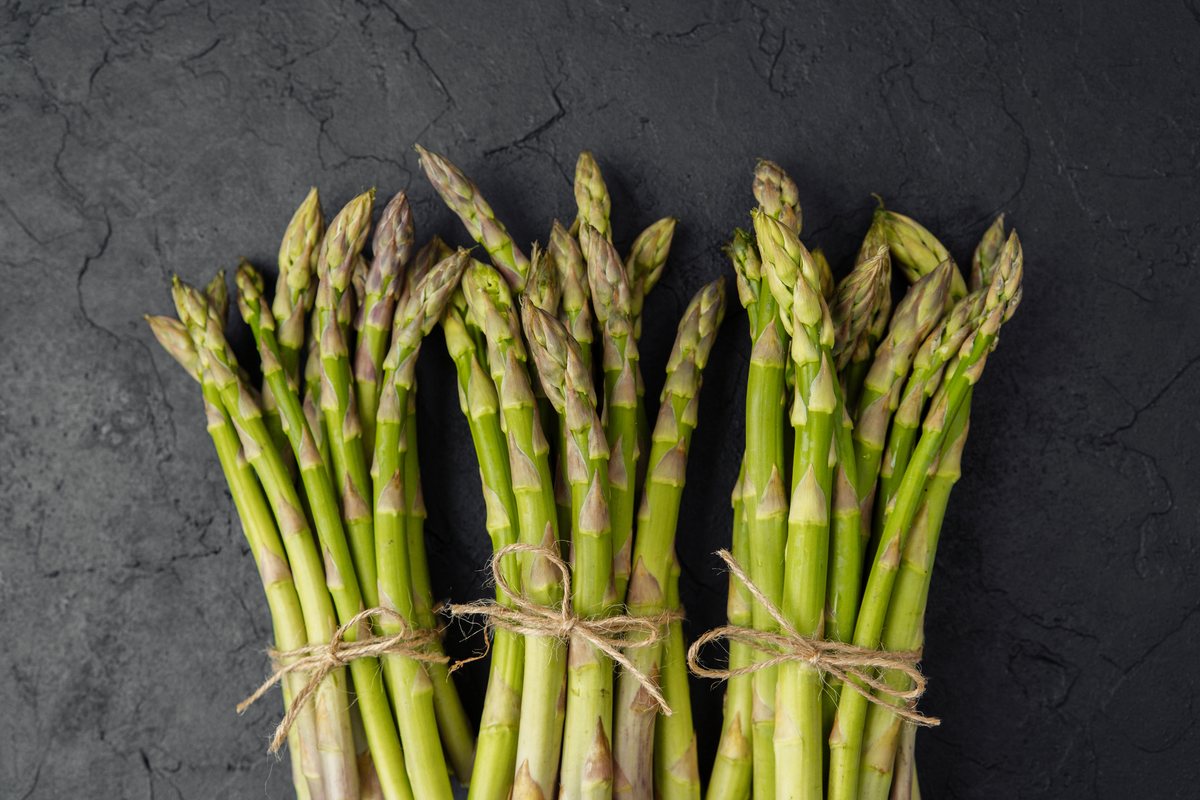
The Romans dried asparagus so they could boil it briefly out of season - one of the oldest recipes is recorded by Apicius.
Wild asparagus grows on the coasts of the Mediterranean and in Western Asia. The Greeks and Romans used it as a vegetable and as a remedy – especially for kidney and bladder ailments. In Germany, asparagus was cultivated in princely gardens from the 16th century onwards and remained a luxury reserved for the nobility for a long time.
White asparagus is a German passion: The shoots grow in mounds of earth in the dark, thus remaining pale and tender. Green asparagus grows in the light and develops chlorophyll. The harvest ends on June 24th, St. John's Day, so that the plant can gather enough strength for the following year. An old saying goes: "When the cherries are red, the asparagus is dead."„
To useWhat asparagus does for you
100g of asparagus contains only about 20 kcal and provides about 2g of protein. Dietary fiber, approximately 50 µg Folate, Vitamin C, vitamin E, and potassium. Green asparagus also contains plenty of vitamin C, vitamin E, and potassium. Vitamin K (around 40 µg) and carotenoids; white asparagus contains significantly less of these. A 500g serving already covers a large part of the daily folate requirement.
Asparagus has been considered since antiquity diuretic. The abundantly contained [substance] is involved. Aspartic acid and the amino acid derivative asparagine, as well as potassium and saponins. Commission E has given a positive assessment of asparagus root for flushing out the urinary tract in cases of inflammatory diseases and for preventing kidney stones – however, the evidence is based on anecdotal evidence, not on large-scale studies. Such an effect has hardly been investigated for the asparagus spears eaten on a plate.
Asparagus also contains fructans such as inulin, which are known as Prebiotics They feed the intestinal flora, as well as glutathione and flavonoids like rutin, especially found in green asparagus. The odor in urine occurs when the body... Asparagusic acid It breaks down into volatile sulfur compounds - not everyone produces it, and by no means everyone can smell it.
IngredientsThis is what's in asparagus
Asparagus contains water, asparagine and aspartic acid, asparagusic acid (containing sulfur), saponins (protodioscin, in the bitter ends), fructans, folate, vitamin C, vitamin E, B vitamins, potassium, phosphorus, glutathione, and in green asparagus, vitamin K, carotenoids, chlorophyll and flavonoids such as rutin.
The bitter saponins are found primarily in the lower ends and the peel. Asparagus with a purple tinge has also developed anthocyanins – it has a slightly stronger flavor.
Enhanced combinationsWhat makes asparagus stronger
Asparagus likes it simple: fresh, briefly cooked and with a little fat.
Vitamins E and K require fat.
The classic for the season.
Add freshness and vitamin C.
Enhances the delicate aroma.
Scrambled eggs or hollandaise sauce.
In a salad with green asparagus.
What contradicts itselfIt's best to avoid these combinations.
Contains moderate amounts of purines.
Peel the white asparagus and cut off the ends.
It becomes woody; wrap it in a damp cloth.
Folate and vitamin C leach into the water.
Use for soup.
Then floating in the water is not advisable.
In the kitchenWhere he belongs
- Asparagus with potatoesWith brown butter.
- Asparagus soupMade from shells and ends.
- Green asparagus from the panseared.
- Asparagus saladWarm with vinaigrette.
- Asparagus risottoWith lemon zest.
- Oven-roasted asparagusIn a packet with butter.
- Asparagus with scrambled eggsSimple spring food.
- Asparagus and strawberry saladGreen, raw, with arugula.
- Asparagus quicheWith wild garlic.
- Grilled asparagusGreen, with olive oil.
As a home remedyAsparagus stock for rinsing
Asparagus broth
- Wash the peels and ends of 500g of white asparagus.
- Bring to a boil with 1 liter of water, a pinch of salt and a pinch of sugar.
- Simmer gently for 20 minutes and then strain.
- Drink the broth warm throughout the day or use it as a base for asparagus soup.
Traditionally used to stimulate urination and as a light spring drink. The decoction provides fluids, potassium, and asparagine. No medicinal effect has been proven for the decoction made from the peels – Commission E only assessed the rhizome.
One to two cups a day, along with plenty of water. Do not drink if you have fluid retention due to heart or kidney failure. Consult a doctor if you experience burning during urination, fever, or blood in your urine.
Ayurveda & TCMWhat the old systems say
Ayurveda
In Ayurveda, Shatavari (Asparagus racemosus), a related asparagus species, is a renowned tonic. Our cultivated asparagus is considered sweet, cooling, and slightly bitter – balancing Pitta and Vata.
Traditional Chinese Medicine
In Traditional Chinese Medicine (TCM), asparagus is described as cooling and sweet-bitter. It is said to clear heat, moisten yin, and promote urination. The root of the related species Asparagus cochinchinensis (Tian Men Dong) is a classic medicinal herb.
Warning noticesWhen you should be careful
Please note
- Gout: Asparagus contains around 20 to 30 mg of purines per 100 g; this is moderate and, according to studies, vegetable-derived purines hardly increase the risk of gout - but not large amounts in the case of an acute gout attack.
- Kidneys and heart: Do not use flushing therapy for edema caused by impaired heart or kidney function.
- Blood thinners: Green asparagus is rich in vitamin K - eat it regularly if you are taking Marcumar.
- Urine odor: harmless and over in about a day.
- Allergy: Rare, primarily contact allergy in asparagus harvesters; cross-reaction with onions and leeks possible.
This page provides information and does not replace medical advice. If symptoms persist, please consult a doctor.
Related to the topicRead on and cook along!
Shop links lead to our product pages; it is indicated there if a partner is involved.
SourcesWhat is this based on?
- Commission E: Monograph Asparagi rhizoma (asparagus rhizome). Federal Gazette, Federal Institute for Drugs and Medical Devices.
- Pelchat ML et al. Excretion and perception of a characteristic odor in urine after asparagus ingestion: a psychophysical and genetic study. Chemical Senses 2011; 36(1): 9–17.
- Markt SC et al. Sniffing out significant „Pee values“: genome wide association study of asparagus anosmia. BMJ 2016; 355: i6071.
- Choi HK et al. Purine-rich foods, dairy and protein intake, and the risk of taste in men. New England Journal of Medicine 2004; 350(11): 1093–1103.
- USDA FoodData Central: Asparagus, raw.