
Tamarind (Tamarindus indica)
OriginThe date from India
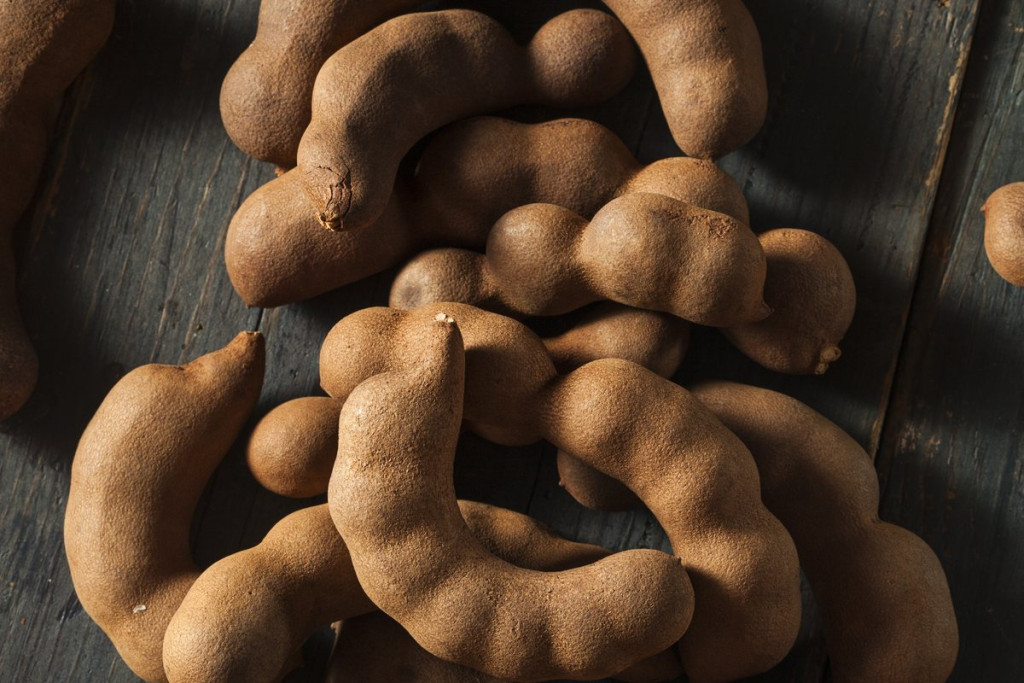
The name comes from Arabic: tamr hindi is called "Indian date".
The tamarind tree probably originated in the dry forests of East Africa, but was brought to India so early that it is already mentioned in ancient Sanskrit texts. From there it traveled on to Southeast Asia; Spanish and Portuguese ships brought it to Mexico and the Caribbean, where the pulp is still used today to make soft drinks and sweets.
The tree can live for several hundred years, survive long periods of drought, and provides dense shade – which is why it is the gathering tree in many villages in India and West Africa. The pulp is extracted from the pods and pressed into paste, concentrate, or the familiar dark blocks. The blocks usually still contain kernels and tough fibers; the paste and concentrate in jars are already strained and ready to use.
To useWhat tamarind does for you
100g of fruit puree provides approximately 240 kcal and about 62g of carbohydrates, most of which are sugars. It also contains about 5g of... Dietary fiber, just under 3 g of protein, around 630 mg potassium, 92 mg magnesium, 74 mg calcium, 2.8 mg iron and lots of vitamin B1. In the kitchen, however, this only counts to a limited extent: A tablespoon of paste seasons an entire pan and therefore puts very little of it on the plate.
The acid comes primarily from Tartaric acid. This is unusual – most fruits rely on citric or malic acid. Tartaric acid tastes softer and rounder, makes the purée last longer, and helps tenderize meat and vegetables in marinades. If you replace lemon juice with tamarind, you'll notice the difference: less sharp, more depth.
In the folk medicine of India and West Africa, tamarind pulp has long been used as a mild laxative, and review articles list a long history of other traditional uses – from treating fever to wounds. However, robust human studies are almost entirely lacking, and there is no European monograph for tamarind from the HMPC committee of the EMA. As a spice, it is a valuable addition; as a medicine, its efficacy remains unproven.
IngredientsThis is what's in the tamarind
The fruit pulp contains sugars, mainly glucose and fructose, fruit acids with tartaric acid as the main component, pectin and other dietary fiber, protein, potassium, magnesium, calcium, phosphorus and iron, vitamins B1, B2 and B3 as well as polyphenols such as procyanidins, catechin and epicatechin.
The kernels are rock-hard and are processed in India into flour and tamarind kernel polysaccharide, a thickening agent. The young leaves and flowers are also edible and are used in soups and salads in South India.
Enhanced combinationsWhat makes tamarind stronger
Tamarind is the acid that holds the spiciness and sweetness together - it rarely stands well on its own.
A classic ingredient in curries and chutneys.
It rounds off the acidity.
The base of Sambar and Rasam.
Fresh spiciness complemented by soft acidity.
The fruit acid makes it tender.
Golden curries with depth.
What contradicts itselfIt's best to avoid these combinations.
Tamarind sweets are almost pure sugar.
Isolated cases of lead contamination.
The acid dissolves metal and tastes metallic.
In large quantities, it has a laxative effect.
Acid attacks tooth enamel.
Remove the cores and fibers.
In the kitchenWhere she belongs
- Pad ThaiThe acid in the sauce.
- SambarSouth Indian lentil stew.
- Tamarind chutneySweet and sour with samosas.
- RasamThin, spicy pepper soup.
- Worcestershire sauceTamarind is a key ingredient.
- Massaman CurryWith potatoes and peanuts.
- Tamarind waterMexican soft drink.
- Fish curryWith coconut milk and tamarind.
- barbecue sauceUse acid instead of vinegar.
- Lentil DalA spoonful of paste right at the end.
As a home remedyTamarind water for hot days
Tamarind water
- Pour 250 ml of hot water over a thumb-sized piece of tamarind block, about 30 g.
- Let it sit for ten to fifteen minutes, then mash thoroughly with a fork.
- Strain through a fine sieve to remove kernels and fibers.
- Pour on 750 ml of cold water, add a little sugar or honey to taste and drink chilled.
In Mexico and India, it's a common drink to combat the heat: sour, slightly sweet, and more refreshing than plain water. Traditionally, it's also believed to have a mild effect on sluggish bowels – this isn't scientifically proven, and it's not effective as a laxative.
One to two glasses a day. Those watching their sugar intake should omit it entirely and dilute the drink more. Rinse your mouth with water after drinking and wait half an hour before brushing your teeth.
Ayurveda & TCMWhat the old systems say
Ayurveda
In Ayurveda, tamarind (amlikaIt is well known: sour in taste, heating, and heavy. It is said to stimulate the digestive fire and calm Vata, but is considered irritating to Pitta and is therefore used sparingly.
Traditional Chinese Medicine
In Traditional Chinese Medicine (TCM), tamarind is classified as sweet-sour and cooling. It is said to clear heat, quench thirst, and resolve food stagnation – a typical role for sour fruits in hot climates.
Warning noticesWhen you should be careful
Please note
- Sugar: Tamarind sweets, syrups and ready-made drinks often contain a lot of sugar - use sparingly if you have diabetes or are giving them to children.
- Lead: Elevated lead levels have repeatedly been found in imported tamarind candies and powders, especially in connection with packaging; it is best not to give them to children.
- Laxative: Larger quantities of the pure pulp significantly soften the stool.
- Tooth enamel: Tartaric acid attacks the enamel; do not brush your teeth immediately after consuming acidic drinks.
- Medications: Tamarind can affect the absorption of certain active ingredients; if taking larger quantities for long-term medication, consult your doctor.
This page provides information and does not replace medical advice. If symptoms persist, please consult a doctor.
Related to the topicRead on and cook along!
Shop links lead to our product pages; it is indicated there if a partner is involved.
SourcesWhat is this based on?
- USDA FoodData Central: Tamarinds, raw.
- Kuru P. Tamarindus indica and its health related effects. Asian Pacific Journal of Tropical Biomedicine 2014; 4(9): 676–681.
- Bhadoriya SS, Ganeshpurkar A, Narwaria J, Rai G, Jain AP. Tamarindus indica: Extent of explored potential. Pharmacognosy Reviews 2011; 5(9): 73–81.
- Centers for Disease Control and Prevention: Childhood lead poisoning associated with tamarind candy and folk remedies - California, 1999–2000. MMWR 2002; 51(31): 684.
- European Medicines Agency (EMA): European Union monographs and list entries - No monograph is listed there for Tamarindus indica.


